Showing posts with label North Dakota. Show all posts

17 October 2024

Big Pandemic on the Prairie: My New Book on Spanish Flu Published

Back during the COVID-19 lockdowns in the spring of 2020, I started thinking about possible parallels between that pandemic and the nation's experience with a previous deadly outbreak. I had only a passing interest in the history of medicine at that point, but I knew that claims that lockdowns and masks were unprecedented were completely erroneous. 

I started with a new lecture on the Spanish flu, which looked at that pandemic on a nationwide level. It only scratched the surface and looked at the broad contours of what happened in 1918 and 1919. I then wondered how states in which I'd lived dealt with the Spanish flu. Lo and behold, the Library of Congress has a database that has a database of digitized historic newspapers, Chronicling America. I found that the three major dailies in North Dakota were available for the time frame I needed to investigate. 

This led to the idea that I could compose a scholarly research article on how newspapers in North Dakota reported on the flu, including the restrictions the state and local governments promulgated. That article came out in North Dakota History in 2021. After finishing up that piece, I still had questions, and I pitched a book on the Spanish flu in North Dakota to Bill Caraher, who was a former professor of mine at the University of North Dakota. Dr. Caraher runs the Digital Press at The University of North Dakota, and this small press sometimes publishes books on local history. He expressed serious interest in such a work, and after I sent a proposal of what I intended to do, he said to send a manuscript when I was done. 

On Tuesday of this week (Oct. 15), the fruit of my labor officially hit the market. Here's a link to the Digital Press's post on the topic, along with options for accessing the book (including in a FREE, open-access digital format), titled Big Pandemic on the Prairie: The Spanish Flu in North Dakota. It looks at a general overview of American medicine, provides a narrative of how the flu progressed through North Dakota, and analyzes how the flu impacted religious bodies, Native Americans, and the North Dakota election in 1918. I'm happy with how the book has turned out, and I hope any readers might find it interesting, educational, and accessible.   


15 March 2024

COVID Aftermath and Scholarly Research

Earlier this year, I received a couple of journal issues from historical societies of which I'm a member, the Conference on Faith and History and the Baptist History & Heritage Society. The former generally publishes two issues per year; the latter generally publishes three. 

I spent much of 2023 wondering when their journals would arrive. The lone 2023 issue for both arrived in early 2024. The Editor's note in Fides et Historia, the journal for the CFH noted that there was a lack of articles in its pipeline at present to publish the normal two issues in 2023. She pointed that Fides was not the only journal in this predicament. 

The lack of access to archives was one suggestion as to why there were fewer article submissions, and this makes sense. I had personally planned to spend Spring Break in 2020 visiting the West Virginia State Archive to undertake research on a topic that I've been working on for a few years (and will hopefully become a book). However, that research trip did not take place, and I spent the week at home in northwestern Kansas. The archive closed. 

I had also received a small grant to visit an Appalachian archive at West Virginia University just before the pandemic hit. I believe I was the first person allowed to access this archive when I finally made my visit in June 2021. Masks were still required. I had intended to visit a presidential library or two, as well, but these were still closed into 2022. 

The lack of access to archives limited the topics which researchers could access. However, online repositories were still available, and the Chronicling America database from the Library of Congress was a major source for my article on Spanish flu that appeared in North Dakota History. Much of that research will appear in my upcoming book on the same topic, and much of my perusal of the secondary literature took place via online repositories to which I have access through a library at an R1 institution.

I also spent a productive week at the North Dakota State Archive for this research. However, that research took place in the summer of 2022. I flew into Bismarck after the removal of mask requirements for flights (although some passengers continued wearing them), and there was no such requirement at the ND State Archive. 

Articles can take months (sometimes years) to write, depending upon the amount of background research needed before writing up the paper. Then, the review and revision process can take a year or more, depending upon a journal's publishing schedule. A big gap in research might lead to fewer articles in the near future, but one would assume this should reverse in relatively short order. 

31 March 2023

Spanish Flu and North Dakota Churches

 Since the early days of the coronavirus pandemic, I've been researching the way North Dakota experienced the Spanish flu. North Dakota History published an article that I wrote in 2021. This article looked at how North Dakota's newspapers provided coverage of the Spanish flu to residents of the state. At first, I thought an article would encapsulate basically everything I wanted to address, but there was way more information available the deeper I dug. 

Therefore, I decided to keep digging and prepare a book manuscript (a draft of which is already completed and submitted to a potential publisher). One of the chapters deals with how religious groups in the state dealt with the flu. Laura Spinney's Pale Rider and a few other secondary sources have noted that many parts of the world took a religious approach to explain the appearance of the deadly contagion. One bishop in Spain asked for a series of prayers to appease the wrath of God. This impulse was not terribly different than the one that drove medieval flagellants to beat themselves in light of the Black Death. God is mad; we must appease him. 

However, when looking at some of the major denomination in North Dakota, there was no real reflection, other than the people lost to the disease (some pastors were among this number) and the ways in which the flu kept the churches from carrying out their organizational plans for the year. There was no attempt to tie the Spanish flu to God's wrath, nor was there any question as to what God might be attempting to tell the world. I found this interesting, given the fact that the world was engaged in a war that was among the more senseless in world history. 

Additionally, this varied from the response by Christians to more recent tragedies that have caused some ministers to claim that some natural or man-made calamity was the punishment of God against wayward people. For example, Pat Robertson claimed that Hurricane Katrina was the result of God's wrath, tying this to abortion and the appointment of John Roberts to the Supreme Court. 

My primary question for the chapter revolved around the ways the churches reacted to the Spanish flu. The article noted above found that churches were a part of the ban on public meetings. Grand Forks was effectively closed for about seven weeks in the fall of 1918, and churches did not meet from early October to late November. Some churches in the town were actually concerned over the possibility of large meetings when the city's health officials decided to allow for public meetings to resume. Schools in the town did not reopen until January. This reaction to the flu in Grand Forks differed from the one evident in Fargo, where ministers petitioned the city to end the public meeting ban before it did in late October. 

Needless to say, these findings were interesting, and they tended to provide some interesting historical context for the actions that took place during the COVID-19 pandemic. 

05 May 2013

Two Years Old--Thoughts on Gilded Age/Progressive Era Baptists

I just thought that I would note that this blog is turning two years old today. Over the past two years, I've posted 126 posts. This one makes the 127th. I have had over 27,000 page views according to the on-site stats.

Some of the things that I've found most interesting are the things that other people are searching for on the internet. Surprisingly, the most popular post that I've had is related to the Old Deluder Satan Act of 1647. I would not have figured that nearly 1,600 people would have an interest in this relatively narrow topic, although it is pretty interesting because of the fact that it shows that the Puritans were very interested in education and were actually willing to levy taxes to pay for it.

Much of my work on this site has focused on Puritans. I have other interests, and my recently-approved dissertation actually focused upon Gilded Age/Progressive Era North Dakota Baptists. These folks tended to emphasize many of the same things that the general Protestant establishment did. Prohibition, a Progressive Era reform (in spite of the idea that it was a conservative concept), showed up in the minutes of just about annual meeting of the North Dakota Baptist State Convention--even after Prohibition became the law of the land in 1918.

The North Dakota Baptists would have agreed largely with Rudyard Kipling's idea of the "White Man's Burden" as the idea of evangelizing and civilizing seemed to come together and get conflated at the time. Of course, it is interesting to note that Jesus said to make disciples, not Anglo-Americans, but in the late nineteenth and early twentieth centuries, many believed that these two ideas were one and the same. Some would still seem to think that this is the case.

I'll be interested to see what the next two years has in store as I begin the transition from full-time grad student to full-time instructor.

08 March 2013

Conference Paper in Omaha

I started my "Spring Break" a couple of days early by canceling my last class before the break. I did this, not to skip out, but because I had a conference presentation. I note Spring Break with quotes because Grand Forks just got nearly a foot of snow last Monday, and there is snow in the forecast over the next week (tonight and tomorrow included).

My presentation took place at the Missouri Valley History Conference in Omaha, Nebraska. I've never actually been in town here before, and the downtown seems to be fairly interesting. My panel dealt with the Great Plains to some degree, and my particular paper tried to cram a few major ideas from about 100 pages of dissertation into ten pages.

I titled my paper "Sin, Superstition, and Socialism: Protestant Sermonizing in Early Twentieth-Century North Dakota. The paper detailed some of my work on the local Baptist history, and included some material from the North Dakota State Archives from the North Dakota Baptist Convention collection that I added to my dissertation work. The superstition in the title was related to the nativist and anti-Catholic worldview that the North Dakota Baptists held. The socialism dealt with the anarchism of the newer European immigrants and the activities of the Nonpartisan League (NPL) in North Dakota.

There was a major opposition to the NPL in the late 1910s, when the organization actually took control of the state government. I noted a couple of sermons that non-Baptists preached that I had the opportunity to come into contact with. The first was at a political rally advertised in the Grand Forks Herald. This rally promised to have a sermon from an ordained minister against the evils of socialism.

The second was a sermon published by F. Harley Ambrose of the First Presbyterian of Grand Forks. Ambrose is noteworthy in a not-so-good kind of way because of his holding the position of the Grand Poohbah (actually it was the "Exalted Cyclops") of the local chapter of the Ku Klux Klan in the 1920s. This "Sermon on Applied Socialism," from my cursory reading of it (I did not include it in the official copy of my paper or my dissertation, so I did not go to great lengths to deconstruct it) seemed to have quite a bit of economic theory, but not much that actually came from the Bible.

The main portion of my paper at the conference actually dealt with the "sin" in the title. Although evangelism was clearly the most important goal of the North Dakota Baptist Convention, moral reform was a not-so-close second. Every annual meeting of the NDBC dealt with the topic of prohibition. They even had a Committee on Temperance set up to promote the cause, and they called for ministers to preach sermons directly related to the topic. Additionally, desecration of Sunday and the "white slave" traffic aroused suspicion.

There were a few good questions related to the paper, and the experience was pretty enjoyable overall.

08 May 2012

Another Semester Under My Belt, Another Writing Project in the Works

It's currently one week into May.  I've completed two years of my doctoral studies and successfully completed comprehensive exams.  One would think that it'd be time to breathe.  Alas, I'm in Bismarck doing some archival research this week for another little writing project that I've taken on.  With all of these small projects, I'm hoping that my CV will become more marketable.

My book should come out shortly, as a proof copy has been approved.  The Old Church on Walnut Street: A Story of Immigrants and Evangelicals is just scheduled to be the first of a series of books on the story of Grand Forks.  The next installment is scheduled for release within the next year.  While my book focused upon one church that had relations to the Norwegian immigrant and evangelical Church of God communities in Grand Forks history, this second book will look into the broader neighborhood in which my church building sat.

Long-time residents speak of a part of Grand Forks known as "Churchville."  That area of the Near Southside neighborhood will be the topic of the next volume in the Community Land Trust Neighborhood History Series.  Some more information on the project, along with a map of the general landscape under consideration is available here.  I will not be the author of this second volume, as the editors want to provide others the opportunity of producing a short book.  With a new class to create (on the topic of American religious history) as wells as the writing project (not related to American Church History), I can't say I'm terribly disappointed.  I will provide more info on the new book as soon as I get it.

18 April 2012

Page Proofs for My Book

I have an online link to the page proofs for my new (and first) book.  Yesterday, the prof who is the editor of the series that this book inaugurates posted it to his blog.  If you read, please keep in mind that this is not the final version, but a nearly final version, so there may be a few typos in the text.  The Grand Forks Community Land Trust is planning to make a series out of this, and this organization is the actual publisher, with UND profs Bill Caraher and Bret Weber as the series editors.  Hopefully, this is at least a small contribution to the history of Grand Forks and the field of American church history, or at least North Dakota history.

09 April 2012

Book Nearly Finished

Today, I got a proof of my upcoming book.  The book's title is The Old Church on Walnut Street: A Story of Immigrants and Evangelicals.  The immigrants in the story are Norwegians that flooded into Dakota Territory/North Dakota in the late nineteenth century.  The evangelicals are related to the Church of God (Anderson, Indiana) movement.  The book should be coming out in the next few weeks, but I though I would give a preview of the first couple of paragraphs from the introduction. Enjoy:


In early March 1944 World War II raged in Europe and the Pacific, and accounts from the front lines and the home front dominated the pages of the Grand Forks Herald.  A late winter blizzard swept through the Northern Great Plains, and the paper maintained a daily update on road conditions as North Dakotans dug their way out the snow.  Along with these headlines, the March 10 edition included a picture and caption that recorded smoke billowing from the Grand Forks Church of God as firemen worked to contain the flames.[i]  (See figure 1)  The building at 224 Walnut Street sustained extensive damage, but the church, undaunted, decided to repair the structure, which remained in service for the congregation until after the Grand Forks flood of 1997.  The flood accomplished what the 1944 fire did not.  Citing an unsound structure, the City of Grand Forks scheduled the old building for demolition in early 2012. 
The old Trinity Lutheran Church, built around 1905,[ii] was not terribly unique in design.  Although it was the last of the wood-framed churches in Grand Forks, many similar wood-framed church buildings continue to dot much of the American landscape, hearkening back to an idyllic time in the nation’s history.  Trinity Lutheran was not an imposing landmark on the city streetscape.  The church tended to blend in with the surrounding homes in the neighborhood, and the simplicity of the structure was very much in line with that of its congregation.  It was not the oldest church in town.  St. Michael’s Roman Catholic Church has expanded over time, but it still resides at the same lot it occupied in the early 1880s and the congregation it serves is the oldest in town.  However, Trinity Lutheran and the two assemblies that worshiped within its walls were an important link to local and national history.  The church at 224 Walnut Street was a tangible reminder of the immigrant struggles of early settlers on the Northern Plains as they attempted to integrate into their new homeland.  This connection to early Norwegian settlers made the building important to Grand Forks history. 


[i] Grand Forks Herald, March 10, 1944.
[ii] The church first appeared on city fire insurance maps in August 1906.  The records available at United Lutheran Church do not indicate when the church was built.  There were earlier churches, but they have either moved or united with other bodies.

10 March 2012

Religion and the North Dakota Caucus

Tuesday was a fairly big day in American politics.  It was that wonderful day during the primary season known as Super Tuesday.  Ten states held presidential primaries or caucuses to award delegates for the upcoming Republican convention.  Throughout my life, I've lived in a state that had a primary.  I've voted in primaries for both parties because I've lived in two counties that had different majority parties.  Those who did not register with the majority party basically had no one to vote for in the primary election, so I based my affiliation accordingly.

North Dakota handles things a bit differently than my home state of West Virginia, however.  They hold presidential caucuses, rather than presidential primaries.  Since Barack Obama is running unopposed, the Republicans were the only party holding a caucus this time.  I decided to go, so that I could appease my curiosity as to how these things really work.  I'd heard rumors about how the Iowa caucuses had people forming groups and then trying to get other people in the room to join their group to support a given candidate (after reading a bit--it didn't work that way this year in Iowa).  To my dismay, it was not quite so exciting. 

One major difference between primaries and caucuses is the party presence.  Primary elections are partisan, but are generally controlled by the state government and its election laws.  The caucus was put on by the party.  That being said, however, no official party registration was necessary to enter the caucus--just a proof of North Dakota residency with an actual street address.  After checking in, voters were given a registration form.  This form was filled out in a room with a podium and several tables with food and several tables with chairs for filling out the forms.  The tables with chairs had all manner of party paraphernalia supporting either Ron Paul or Rick Santorum (sorry, Mitt and Newt).  This type of advertising is generally illegal within a certain distance primary elections.

This is where the religious element came into play.  The meeting opened with the pledge of allegiance, and then a (historically debatable) prayer.  I personally found this very interesting.  I like talking politics, but I've never actually attended a political rally, partially because of my personal lack of affinity for any major party currently operating in American life.  To actually see a party have a prayer in a country that claims separation of church and state was interesting.  Of course, there is always a prayer at the presidential inauguration and other official events.  I would've liked to have gone to a Democratic caucus to see if a similar prayer (similarly debatable historically) would've been offered.  I would've liked to have gone to a Republican caucus in a not-so-midwestern or Bible Belt state to see if something similar would have happened.  After the prayer was a stump speech by a local radio (I think) personality pushing for Rick Santorum.  Apparently these guys for Santorum were successful--he won the North Dakota caucuses.

Many people have questioned the invocation of God in the public square.  Apparently it doesn't matter when the party is in charge of an event, even if they get their history slightly wrong in their prayer.  I do have to question tying God to a particular political party.  Regardless, American church history and American political history have frequently intersected, in spite of arguments to the contrary.

PS--the historically debatable portion of the prayer had to do with talking about a nation founded on liberty, equality, and justice.  This is both a true and false statement.  For land-owning white men (i.e., the people who mattered in the eighteenth century), America was founded on liberty, equality, and justice.  These qualities just did not extend beyond that demographic.  For poor white men who were serving indentures, Africans who were enslaved, and Indians who were run off of their land, this statement is definitely debatable (i.e., erroneous).  While Americans have definitely been blessed and fortunate throughout the decades, I have trouble believing God was impressed with that part of American history.

21 February 2012

More on My Local Church History Project

Something I've been working on for the past six months is a short book project on a local church here in Grand Forks.  I recently posted some pictures of the building that is scheduled to be demolished as soon as the ground dries out after winter.  My book on the subject looks as though it is going to be just the first in a series of local histories on the Grand Forks community taken on by the University of North Dakota history department and the Grand Forks Community Land Trust.

Today, Dr. Bill Caraher wrote about the ultimate scope of the project on his blog, The New Archaeology of the Mediterranean World.  While my part in the project will be most likely be done in the next couple of months, I'll be interested to see how the rest of the project works out.  I'm sure that a block-by-block history of the town will have to deal with several local North Dakota churches of various denominations, as basically every major denomination in American church history has been active at one point or another in Grand Forks.  I'll be sure to post more about the book as it gets closer to publication.

12 February 2012

The Generosity of Charles H. Spurgeon

It's nearing mid-February here in North Dakota, and the last couple of days have been two of the colder days we've had thus far this winter.  After last year, this year has been a breeze with only a handful of days with lows in the teens below zero.  Last year, the average high in January was 9.  This year, it was 26, which was the average high for March last year.  Not too bad at all.

Last summer, as I've mentioned previously here and here on this site, I had an internship with the Theodore Roosevelt Center at Dickinson State University.  That internship with the digital library gave me an opportunity to research all sorts of seemingly random people.  Most of the documents I reviewed were letters to President Roosevelt or one of his close associates.  The authors of these letters could at times be quite famous people, such as Elihu Root, Henry Cabot Lodge, or Mark Hanna (those with knowledge of the Progressive Era will find these names familiar).  At times, they would be unknown to me. 

Finding the names of these less-well-known individuals in the correspondence would invariable lead to that all-too-twentieth-century research tool--the Google search.  At times, these folks were like ghosts...nonexistent.  At other times, I would learn some interesting information.  One of the people that I had to research in this manner was a New York Judge by the name of F. W. Holls.  He was influential in leading a famous peace delegation at the Hague.  My search for Judge Holls led me to the New York Times' October 23, 1903, edition.  Old NYT articles are available for search on the web, and they were invaluable for me over the summer.  Holls died in July of that year, and President Roosevelt sent a personal eulogy to be read at the memorial service. 

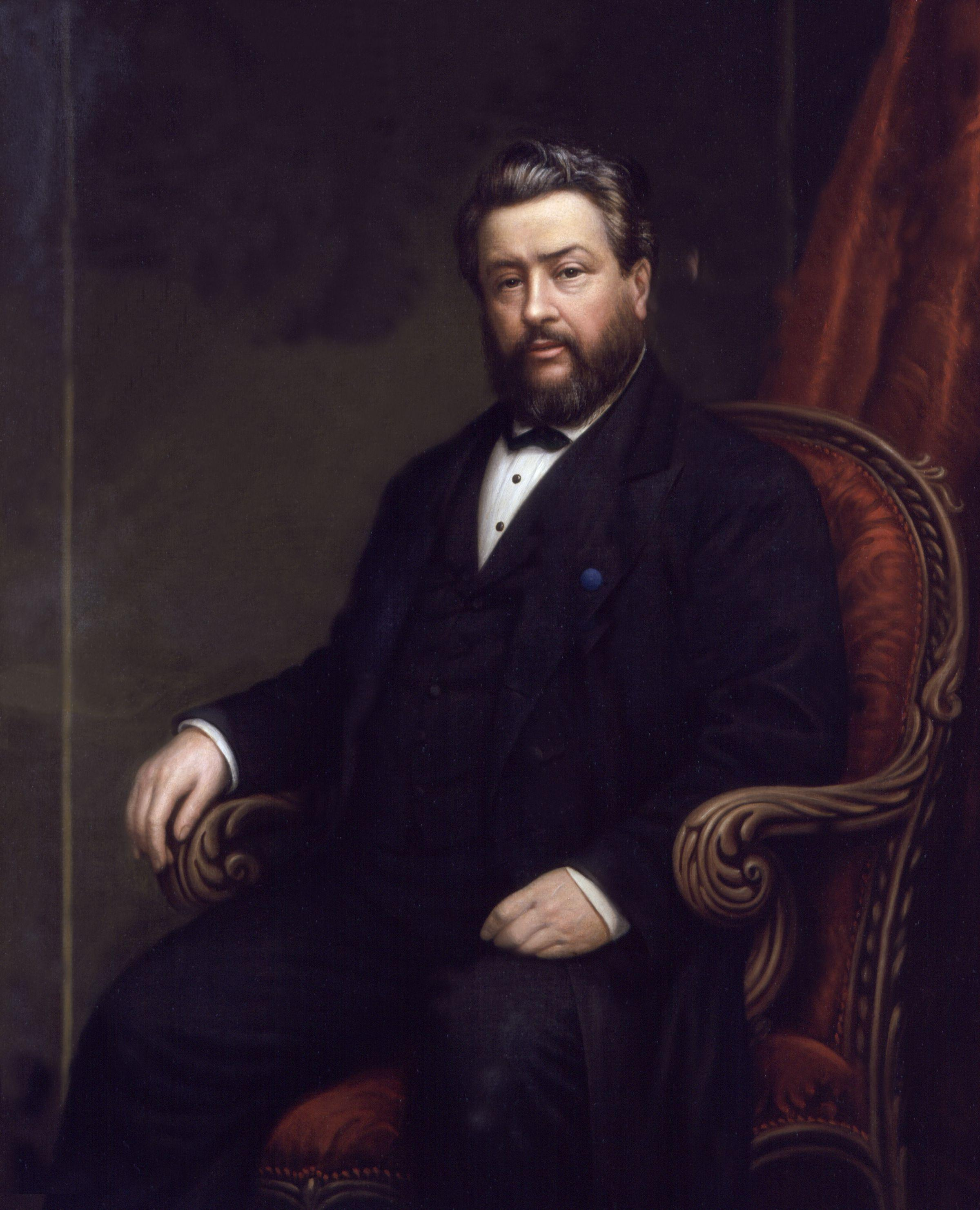
This was not what caught my interest, however.  Right below the account of Holls' memorial was an obituary for the widow of the famous British Baptist pastor Charles Haddon Spurgeon.  The main emphasis of the obituary that struck me was the mention of both Charles and Susannah Spurgeon's generosity.  The obituary stated: "In 1879 Mr. Spurgeon's congregation, on the occasion of his silver wedding, presented a purse containing 6,000 [pounds sterling] to him.  He immediately divided the money between the Orphanage, Pastor's College, and other institutions he founded."

A sum such as that provided to the Spurgeons would no doubt have been equivalent to several years' wages for an average Briton in 1879.  He was a mega-church pastor before anyone had heard of the mega-church.  He is still regarded one of the more influential figures in Baptist history.  How many modern American ministers would be inclined to give such a sizable sum away today?  While most ministers are no doubt in the ministry for the good of their parishioners, there are those who are infamous for their flaunting of wealth--be it clothing, cars, or houses.  I won't mention names, but one comes to mind that was on basically every TV station early in the morning during my high school years. 

The church could use a few more Spurgeons in my opinion (on so many levels).

28 January 2012

Pictures of the Church I'm Writing My Book On

As I've mentioned briefly before, I'm in the process of writing a short book on a church that is about to be demolished as soon as spring comes to North Dakota.  This church has been abandoned for about 14 years, and the structure on the inside and outside show the wear.  The church, as you can hopefully see, blended into the city streetscape of the town.  The lack of a parking lot no doubt contributed to its decline, as it did several other small churches in town.  This is the last of the old-style wood-framed churches in town, and it is a link to the immigrant past of Grand Forks.  This is one of the important threads that I'm trying to bring out in the book, which should be out around the time of the demolition.


Note the proximity to the house, as well as the lean of the wall.  Now, the interior with a sagging ceiling and gutted fixtures:


Note the charred attic, left from a fire in 1944.  More to come about American church history at a later date--including information on how to get the book.

01 December 2011

American Churches and Racism

Why are churches some of the most segregated places around in America today?  I've often wondered this, and I must say that it really, really bugs me.  Race is obviously a contentious issue in American history.  One need not look any farther than the relations between new seventeenth-century settlers and group that these Anglo-Americans drove out of their homeland (American Indians) and between the same Anglo-American settlers and a group (African slaves) that they brought across the Atlantic against their wills.  Some people would argue that racism is largely gone today.  Then a story like the following shows up in the news. Just recently, a Kentucky church voted to exclude interracial couples from membership.

Moves like this definitely show that racism is far from dead.  Would the interracial character of the relationship been a big deal to those that voted to exclude the couple if the non-white member had been a Christian from Turkey, Korea, or Brazil, rather than Africa?  The answer can't be known definitely, but it seems that black/white relationships seem to draw the biggest complaint.  Of course, this goes against Paul's writings about there being no distinctions in the body of Christ (see Galatians 3:28, which ironically, considering American history, put slaves and masters on the same level).

Racism and bigotry have been very common throughout American history.  A recent post on the Religion in American History blog talks about some of the recent directions in the historiography of the Ku Klux Klan.  This post was quite interesting.  I've also read a couple of interesting works lately on the topic of bigotry.  

One was Lynn Neal's article in the June 2009 issue of Church History, "Christianizing the Klan." This article showed how KKK sympathizers used images in their literature that depicted the Klan in Christian and 100% American terms against Catholics, Jews, unions, etc. A good recent work on anti-Catholic journalism in the Progressive Era is Justin Nordstrom's Danger on the Doorstep. The anti-Catholic publication, The Menace, had the second-highest subscription rate in America for a time. All of this tied to the idea of 100% Americanism, which the KKK endorsed. I was also doing some research recently on a totally unrelated subject, and a minister's autobiography (Albert F. Gray) told of a service that he attended (I believe it was Washington State) in which some men in robes came in, presented an American flag, and left. Although the book did not identify said men, I assume that it was some Klansmen given the time period and this practice. (I posted the previous paragraph as a comment on the American religion blog post noted above).

This 100% Americanism has shown up in much of my research on Grand Forks, North Dakota, religious history.  A Baptist church, which I've mentioned in a couple of conference papers that I've posted here, definitely believed in American exceptionalism and thought that the rest of the world should become English-speaking American-style democrats against WWI-era German autocrats.  A Lutheran church in town that I've studied transferred to English-speaking services around the same time that there were moves for 100% Americanism.  While I can see the desire for people to speak the same language as others, because it's difficult to communicate without speaking the same language, I don't think that a proper understanding of Christianity allows for the blatant racism that many in American history have fostered (and apparently continue to foster) in their churches.  I would personally argue that it makes the church as a whole look bad to society.  However, it's just a reflection of the view of people who vote this way in church meetings.

16 November 2011

Winding up a Semester

Well...it seems as though my third semester as a doctoral student just started.  When it did, there were leaves on the trees and the daytime high temp was around 90.  Yesterday, we got our first measurable snow and the high temp today was somewhere in the mid-20s.  Even though the snow was only around an inch, its still around.  Only 4 weeks left in this semester. 

From time to time I submit a post to the Christian Blog Carnival.  This week's host is Harry Neufeld at Jevlir Caravansary.  My recent post on Weber's thesis on the Protestant work ethic was included.  Included on this was a post that questioned if there was room for Christian business leaders in today's cut-throat climte.  I found the article interesting in light of all of the complaints about poor ethics in business today.

Another academic blog that I look at frequently is the Religion in American History blog.  This blog recently had a three-part series by an academic who worked at a Christian company for the summer that tied in some ways to the Weber thesis.  Another writer on this collaborative blog included a response to the initial series.  These have been some of the more interesting non-school related things that I've seen lately.  I'm still plodding away on a Puritan historiography, research for an upcoming public history publication on a historic North Dakota church building, and independent readings on general world history. 

17 October 2011

Grand Forks Church History


Mondays are generally a heavy work day for me, even though I typically don't venture onto campus. I usually use Mondays as an opportunity to catch up on reading and other assignments for the upcoming week. I have a book review due tomorrow, so I submitted it today.  I also read a huge chunk of a book on the World-system of the thirteenth and fourteenth centuries.  In world history circles, world-systems deal with core and peripheral economic zones.  I also did a bit of writing on my major piece of original research for this semester.  As I've mentioned on the site before, I'm doing some work on a couple of local congregations that occupied a building now slated for demolition (which happens to be in a historic district--although I will also point out that it is not structurally sound by even the most liberal definition of the term).  I've also mentioned the maps that I'm utilizing to show change over time in the religious landscape of Grand Forks.  Here is a short excerpt of a (very) rough draft of this study.  Enjoy :)

The Grand Forks Religious Landscape
            As people began to migrate into the valley of the Red River of the North after the opening of the Dakota Territory to homesteaders, religious organizations followed closely to minister to their adherents and win converts to the Christian faith.  One way to track the entrance of new religious bodies into the town of Grand Forks (or other communities) is through a study of insurance maps.  Although their technology now includes the most up-to-date geographic programs, the Sanborn Map Company produced several fire insurance maps that detailed the landscape of Grand Forks beginning as early as 1884.  These maps indicate change over time as the town’s streetscape expanded over the prairie.  The maps also give an estimate of Grand Forks’ population in intervals that do not necessarily correspond to decennial censuses, so it is possible to track growth in both the number of buildings and streets, as well as the estimated population.  These maps are particularly useful in ascertaining the relative wealth and importance attached to specific buildings.  Sanborn color coded structures to indicate the particular building materials used in construction.  Most buildings on the Sanborn maps of Grand Forks had a yellow designation as dwellings with a basic frame construction.
            The Sanborn maps also indicated other building uses, such as businesses and churches.  An 1884 map estimated that Grand Forks had a population of approximately 6,000.  The same map recorded only five church buildings in town: the Methodist Episcopal Church at 722 4th Street, the Presbyterian Church at 817 5th Street, the Baptist Church at 815 Alpha Avenue, St. Paul’s Episcopal Church at 314 5th Street, and St. Michael’s Catholic Church at 101 6th Street.  Each of the denominations recorded in 1884 were major nation-wide denominations.  However, one interesting point that is evident from a perusal of the maps is the building materials that the churches used in their respective buildings.  All of the buildings at this early date utilized a wood frame in construction, although the Presbyterians, Episcopalians, and Catholics had strengthened their structures with a brick veneer.[1]


[1] “Grand Forks, Dakota,” Sanborn Map & Publishing Co., 1884. North Dakota Sanborn Fire Insurance Map Collection (hereafter ND Sanborn Maps), Folder 519. Orin G. Libby Manuscript Collection, Chester Fritz Library, University of North Dakota, Grand Forks, ND.

02 October 2011

Immigrant Churches

I'm enjoying what is very likely the last hurrah of summer.  Here in Grand Forks, the temperature today reached the low 80s.  There is hardly a cloud in the sky.  However, I'm sure this weather will change in very short order.

My current research on a church in town is still on-going.  I've found that immigrants originally had the building built for their services.  This Hague Synod Lutheran congregation merged with two other Lutheran congregations, and sold the building to a Church of God (Anderson) that had been in operation in Grand Forks for several years at the time.

The Church of God left the building, as the city bought the building shortly after the Grand Forks flood of 1997.  For several years, there were nine churches within three blocks in any direction--quite literally averaging a church per block.  Immigrants tended to build or purchase small wood-framed structures, and the build larger churches in a few years.

I'm reading a bit on late 19th- and early 20th-century immigration to get a feel for this field.  I just finished reading a book titled Magnificent Churches on the Prairie (co-authored by James Coomber and Sheldon Green) that looked at several Catholic congregations that built very large buildings.  Most of them started in the same way.  The congregations mentioned in this book tended to have small wood-framed structures and then moved into larger buildings as the funds became available.  These buildings, as it appears some of those in early Grand Forks did, served to tie the community together in this new land thousands of miles from home.  The Lutheran congregations in Grand Forks spoke Norwegian for a generation, while these Catholic churches in rural areas used German (except, of course for the mass, which was in Latin). 

This work is serving to fill out some of my understanding of the religious make-up of the early days of Red River Valley towns, especially that of Grand Forks.  I will share more as I get further into the process.

09 September 2011

My Current Work Mentioned on Another Site

I recently wrote about some of my current work and how it involves maps.  I just finished up my initial overview of these Sanborn maps that show how the landscape of Grand Forks, North Dakota, changed over time.  The location and the building material of churches is my main concern in undertaking this survey. 

One of my professors at UND maintains a blog, and it was actually his interest in this particular church that is about to be demolished that got me involved in this particular project.  The church is actually located in a historic district, and appears (from the records available) to be the oldest wood-framed church still standing in town.  One of the recent posts on his blog gives some pictures, as well as some of my preliminary hypotheses regarding the religious landscape of Grand Forks around the turn of the 20th century.

02 September 2011

Church History through Maps

This semester, I'm again doing some research on local religion.  Last fall, I wrote a fairly lengthy paper on a local Baptist Church to which I've made some comments on this blog (even going so far as to post an entire paper that I read at the Red River Valley History Conference).  This fall, I'm working on a church building that housed a couple of different congregations over a period of about 100 years.  The building is about to be torn down, as it has been empty since the Grand Forks Flood of 1997.  More about the history of this specific church at a later date.

Today, I spent about three hours in the special collections department of the Chester Fritz Library.  I usually go through documentary evidence for my research, which would include letters, manuscripts, church records, etc.  On this trip, however, I utilized a resource of which I was basically unaware until the last couple of weeks.  Sanborn maps are a great resource for understanding the historical landscape of cities.  The main users of Sanborn maps were originally fire insurance companies.  The maps show the streetscapes of urban areas, complete with color coding to depict the specific building materials utilized in the erection of the respective structures.  Building materials are obviously of particular interest to fire insurers. 

The library has maps from various intervals in the late nineteenth and early twentieth centuries.   Several things are evident from a perusal of these maps.  I checked out maps from 1884, 1888, 1892, 1897, and 1901, and I still have several to investigate.  One thing that is evident from the maps that I looked at today is that the number of churches in Grand Forks grew from 5 to 13 from 1884 to 1897.  The number remained steady at 13 in 1901.  Another interesting point that is apparent from looking at the map is that the older, more established churches had structures that employed more durable materials.  One negative to the use of wood is the threat of fire.  Stone and brick are not quite as susceptible to fire damage.  One final thing that I found quite interesting was the growth of ethnic churches over the period.  The original five churches remained--Catholic, Baptist, Methodist Episcopal, Presbyterian, and Episcopal.  To the original five, the city saw the addition of Norwegian Baptists and Scandinavian Lutherans, among others.  These ethnic names are not nearly as obvious today.  The rise and decline of specifically ethnic churches is an avenue that I find of interest, and one that I intend to investigate.  I will post some of my findings of interest in the comings months.


13 July 2011

2011 Merrifield Prize Winning Paper

Back in April, I submitted a paper that I wrote in the fall semester on Baptists in Grand Forks during the Progressive and World War I eras.  The submissions had to make use of the Special Collections at the Chester Fritz Library on the campus of the University of North Dakota.  Mine utilized that collection extensively, so I decided to submit, in spite of finding out about the competition about two days before the deadline. 

Here is the press release regarding the outcome of the competition.  I would post the entire paper on my site, but I submitted it to a journal, and I don't know how the journal in question would view that kind of thing.  Here is a link to a revised portion of the paper that I previously posted on this site and that won the best graduate paper at the 2011 Red River Valley History Conference.  I will post another revision of another portion after I read it at the 2011 Northern Great Plains History Conference.

10 July 2011

North Dakota Revivalism-End of the Story

In recent weeks, I posted a couple of posts related to a July 1930 editorial that discussed an upcoming Billy Sunday meeting in Grand Forks, North Dakota. The author of this editorial, W. P. Davies, opposed such revivals based upon the city's experience with an evangelist by the name of Hunt, who raised funds for a tar-paper "tabernacle" and then proceeded to spread rumors about many prominent members of Grand Forks society. 

While those posts referred to an editorial from July 1, 1930, Davies clarified his position on July 3 in the Grand Forks Herald.  He started his article by stating, "Those who read the article in this column relating to the so-called evangelist Hunt may have gained the impression that I did not and do not admire Mr. Hunt.  That impression is quite correct."  The editorialist then went on to explain his reasoning in this follow-up article.

He mentioned that Hunt was able to amass a very large children's choir for the occasion of his meetings.  In fact, the choir number about 300 and Davies remembered how well they could sing.  However, it seems that Hunt changed the words of familiar hymn tunes and then inserted parodies of leading members of Grand Forks society for the children to sing.  Apparently, Davies also had a problem with the way Hunt used "coarse suggestiveness" to bring the "vileness of the saloon and bawdy house" to bear in his sermons.  The story of Hunt and Grand Forks ended after several people dropped a lawsuit against the evangelist to claim the tar-papered tabernacle.  In these two articles, it does not appear that Davies opposed Christianity or religion in general, just certain self-promoting preachers like Mr. Hunt.

Unfortunately, from a quick search of the digital archive, it appears that Davies did not disclose his opinion of the Billy Sunday event.  The acceptance (or non-acceptance) of Sunday, as well as other opinions on Hunt's meetings from contemporaries, could be a great avenue of future study to better gauge the attitude of this town on the Northern Great Plains toward revivalism in the early twentieth century.  Some who study evangelicalism argue that this type of revivalism was very important in leading to the "revival" (pun somewhat intended) of the fundamentalist movement in the late 1940s.