It's nearing mid-February here in North Dakota, and the last couple of days have been two of the colder days we've had thus far this winter. After last year, this year has been a breeze with only a handful of days with lows in the teens below zero. Last year, the average high in January was 9. This year, it was 26, which was the average high for March last year. Not too bad at all.
Last summer, as I've mentioned previously here and here on this site, I had an internship with the Theodore Roosevelt Center at Dickinson State University. That internship with the digital library gave me an opportunity to research all sorts of seemingly random people. Most of the documents I reviewed were letters to President Roosevelt or one of his close associates. The authors of these letters could at times be quite famous people, such as Elihu Root, Henry Cabot Lodge, or Mark Hanna (those with knowledge of the Progressive Era will find these names familiar). At times, they would be unknown to me.
Finding the names of these less-well-known individuals in the correspondence would invariable lead to that all-too-twentieth-century research tool--the Google search. At times, these folks were like ghosts...nonexistent. At other times, I would learn some interesting information. One of the people that I had to research in this manner was a New York Judge by the name of F. W. Holls. He was influential in leading a famous peace delegation at the Hague. My search for Judge Holls led me to the New York Times' October 23, 1903, edition. Old NYT articles are available for search on the web, and they were invaluable for me over the summer. Holls died in July of that year, and President Roosevelt sent a personal eulogy to be read at the memorial service.
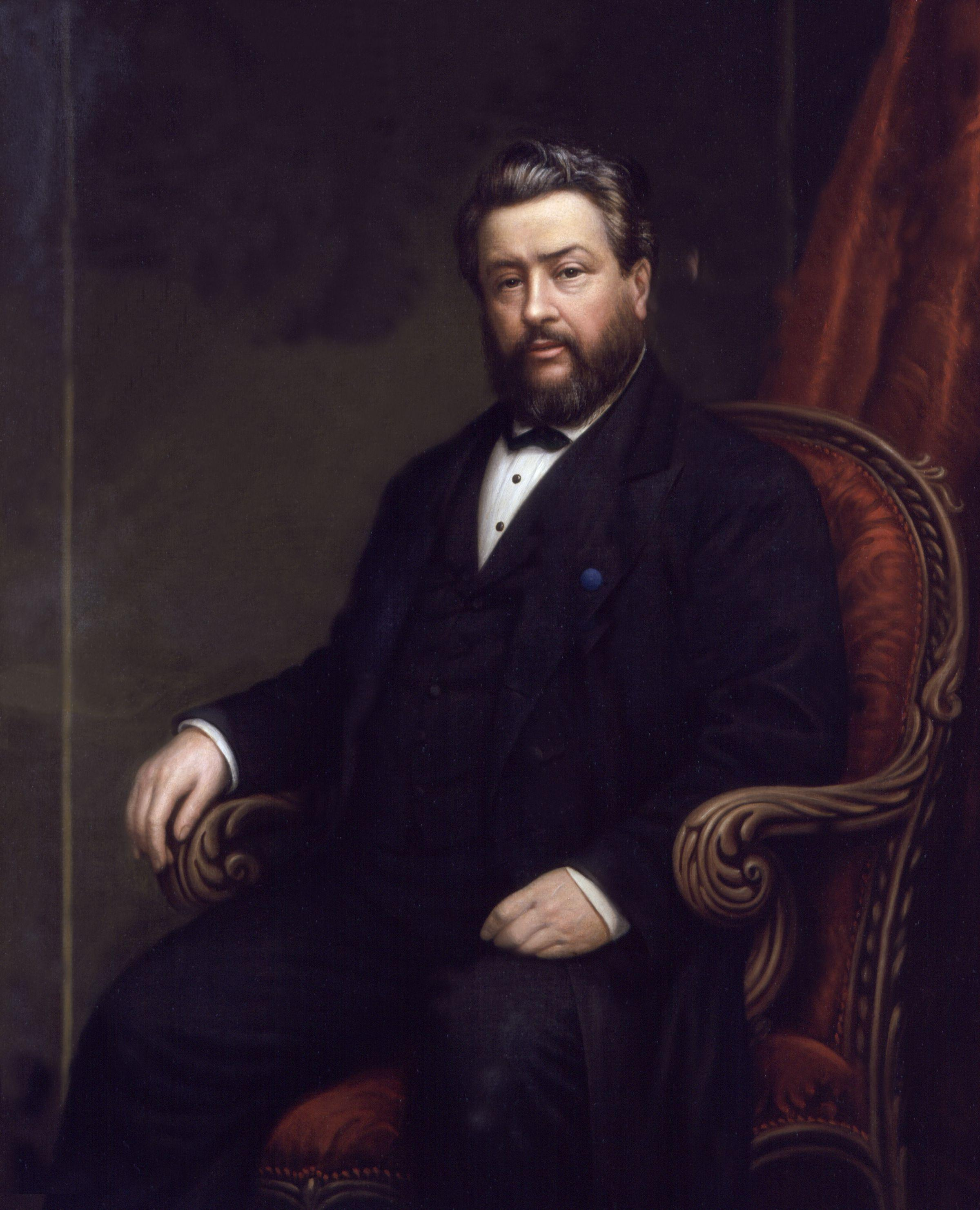
This was not what caught my interest, however. Right below the account of Holls' memorial was an obituary for the widow of the famous British Baptist pastor Charles Haddon Spurgeon. The main emphasis of the obituary that struck me was the mention of both Charles and Susannah Spurgeon's generosity. The obituary stated: "In 1879 Mr. Spurgeon's congregation, on the occasion of his silver wedding, presented a purse containing 6,000 [pounds sterling] to him. He immediately divided the money between the Orphanage, Pastor's College, and other institutions he founded."
A sum such as that provided to the Spurgeons would no doubt have been equivalent to several years' wages for an average Briton in 1879. He was a mega-church pastor before anyone had heard of the mega-church. He is still regarded one of the more influential figures in Baptist history. How many modern American ministers would be inclined to give such a sizable sum away today? While most ministers are no doubt in the ministry for the good of their parishioners, there are those who are infamous for their flaunting of wealth--be it clothing, cars, or houses. I won't mention names, but one comes to mind that was on basically every TV station early in the morning during my high school years.
The church could use a few more Spurgeons in my opinion (on so many levels).
Showing posts with label Theodore Roosevelt. Show all posts
12 February 2012
25 August 2011
Theodore Roosevelt and Catholicism
I've mentioned my summer gig working for the Theodore Roosevelt Center's online library that is getting set to launch in the relatively near future. My main job was reading digital documents and then categorizing it according to subject matter. Some of the documents related to my interest in American Christianity.
I've recently written about the Progressive and World War I eras, and one of the things that I find pretty interesting about that period is nativist sentiment. Nativism is basically an anti-immigrant stance. During much of US history, this anti-immigrant stance included anti-Catholicism. Some people were quite vocal about their fear of a popish conspiracy to take over America. He is a link to a blog post that I sent to the TRC's blog with information on how Theodore Roosevelt was a bit more congenial with Catholics than some people would have liked for him to be. This is just a small example of some of the things that I have found. I actually included the document from Addison Thomas in a paper that I'm scheduled to present in Mankato, MN next month. I'll post the paper here after I read it.
19 May 2011
Summer Gig--Internship
As of last Friday night, when I turned in the final grades from my section of "The United States since 1877" my first year as a doctoral student officially came to an end. I really enjoyed being a full-time student again, and also enjoyed the opportunity to teach a college class on a college campus. My assistantship ended with the semester, however, and I was left with the question of what to do with the summer. While I am not against working at Wal-mart or some other similar job (I've worked in both the fast food and grocery industries in my day), I wanted something that would be beneficial to my academic and career goals.
I found the perfect job, an internship with the Theodore Roosevelt digital library, which actually has North Dakota ties because of Roosevelt's time in Dakota Territory. The first presidential library was set up for Herbert Hoover. TR's second term ended about twenty years before Hoover's lone term began. Therefore, there is no presidential library for Roosevelt. One really cool thing about this job is that I get to read all sorts of old documents on all sorts of (sometimes) random topics related to one of my favorite presidents. As an aspiring historian, this is the type of work that provides ammo for articles and, hopefully, books. Regardless of whether any publications come from this work, it nonetheless provides a great learning experience and helps me understand more about one of the past eras that I find especially interesting.
One of the topics that I have already had an opportunity to notice is religion. Various correspondents have discussed Catholicism, Methodism, and Protestantism in their letters and other communications with the Progressive Era president. One of the interesting letters mentioned Protestantism and Americanism in the same context (actually the same phrase of the same sentence). Some of my previous reading and research shows that many Americans from this era viewed the terms nearly synonymously. I am only in the first week of this job, and I've already seen several of these interesting notes. I'm hoping to see many more since my major research project is going to focus upon Progressive/World War I era Christianity.
I found the perfect job, an internship with the Theodore Roosevelt digital library, which actually has North Dakota ties because of Roosevelt's time in Dakota Territory. The first presidential library was set up for Herbert Hoover. TR's second term ended about twenty years before Hoover's lone term began. Therefore, there is no presidential library for Roosevelt. One really cool thing about this job is that I get to read all sorts of old documents on all sorts of (sometimes) random topics related to one of my favorite presidents. As an aspiring historian, this is the type of work that provides ammo for articles and, hopefully, books. Regardless of whether any publications come from this work, it nonetheless provides a great learning experience and helps me understand more about one of the past eras that I find especially interesting.
One of the topics that I have already had an opportunity to notice is religion. Various correspondents have discussed Catholicism, Methodism, and Protestantism in their letters and other communications with the Progressive Era president. One of the interesting letters mentioned Protestantism and Americanism in the same context (actually the same phrase of the same sentence). Some of my previous reading and research shows that many Americans from this era viewed the terms nearly synonymously. I am only in the first week of this job, and I've already seen several of these interesting notes. I'm hoping to see many more since my major research project is going to focus upon Progressive/World War I era Christianity.
Subscribe to:
Posts (Atom)