I just thought that I would note that this blog is turning two years old today. Over the past two years, I've posted 126 posts. This one makes the 127th. I have had over 27,000 page views according to the on-site stats.
Some of the things that I've found most interesting are the things that other people are searching for on the internet. Surprisingly, the most popular post that I've had is related to the Old Deluder Satan Act of 1647. I would not have figured that nearly 1,600 people would have an interest in this relatively narrow topic, although it is pretty interesting because of the fact that it shows that the Puritans were very interested in education and were actually willing to levy taxes to pay for it.
Much of my work on this site has focused on Puritans. I have other interests, and my recently-approved dissertation actually focused upon Gilded Age/Progressive Era North Dakota Baptists. These folks tended to emphasize many of the same things that the general Protestant establishment did. Prohibition, a Progressive Era reform (in spite of the idea that it was a conservative concept), showed up in the minutes of just about annual meeting of the North Dakota Baptist State Convention--even after Prohibition became the law of the land in 1918.
The North Dakota Baptists would have agreed largely with Rudyard Kipling's idea of the "White Man's Burden" as the idea of evangelizing and civilizing seemed to come together and get conflated at the time. Of course, it is interesting to note that Jesus said to make disciples, not Anglo-Americans, but in the late nineteenth and early twentieth centuries, many believed that these two ideas were one and the same. Some would still seem to think that this is the case.
I'll be interested to see what the next two years has in store as I begin the transition from full-time grad student to full-time instructor.
Showing posts with label Baptist History. Show all posts
Showing posts with label Baptist History. Show all posts


27 February 2012
New Southern Baptist President?
Recently, I posted some questions about Southern Baptists and their considerations about changing the name of their convention. There is concern that their racist origins still influence the opinion that people have of the SBC. Recently, the convention has made strides in attempting to right their wrongs in relation to race.
Now, it appears that the Convention is about to elect its first African American president. Rev. Fred Luter is a well-known pastor in New Orleans who pastors a church with about 5,000 members. He is currently the First Vice President in the convention, and was involved on the committee that produced the 2000 revision of the Baptist Faith and Message, so it would appear he's no theological liberal. It appears as though Luter will be unopposed in his run for the presidency, but regardless, there is little doubt that his election should be a positive step in race relations for the largest Protestant denomination in the United States.
Now, it appears that the Convention is about to elect its first African American president. Rev. Fred Luter is a well-known pastor in New Orleans who pastors a church with about 5,000 members. He is currently the First Vice President in the convention, and was involved on the committee that produced the 2000 revision of the Baptist Faith and Message, so it would appear he's no theological liberal. It appears as though Luter will be unopposed in his run for the presidency, but regardless, there is little doubt that his election should be a positive step in race relations for the largest Protestant denomination in the United States.
12 February 2012
The Generosity of Charles H. Spurgeon
It's nearing mid-February here in North Dakota, and the last couple of days have been two of the colder days we've had thus far this winter. After last year, this year has been a breeze with only a handful of days with lows in the teens below zero. Last year, the average high in January was 9. This year, it was 26, which was the average high for March last year. Not too bad at all.
Last summer, as I've mentioned previously here and here on this site, I had an internship with the Theodore Roosevelt Center at Dickinson State University. That internship with the digital library gave me an opportunity to research all sorts of seemingly random people. Most of the documents I reviewed were letters to President Roosevelt or one of his close associates. The authors of these letters could at times be quite famous people, such as Elihu Root, Henry Cabot Lodge, or Mark Hanna (those with knowledge of the Progressive Era will find these names familiar). At times, they would be unknown to me.
Finding the names of these less-well-known individuals in the correspondence would invariable lead to that all-too-twentieth-century research tool--the Google search. At times, these folks were like ghosts...nonexistent. At other times, I would learn some interesting information. One of the people that I had to research in this manner was a New York Judge by the name of F. W. Holls. He was influential in leading a famous peace delegation at the Hague. My search for Judge Holls led me to the New York Times' October 23, 1903, edition. Old NYT articles are available for search on the web, and they were invaluable for me over the summer. Holls died in July of that year, and President Roosevelt sent a personal eulogy to be read at the memorial service.
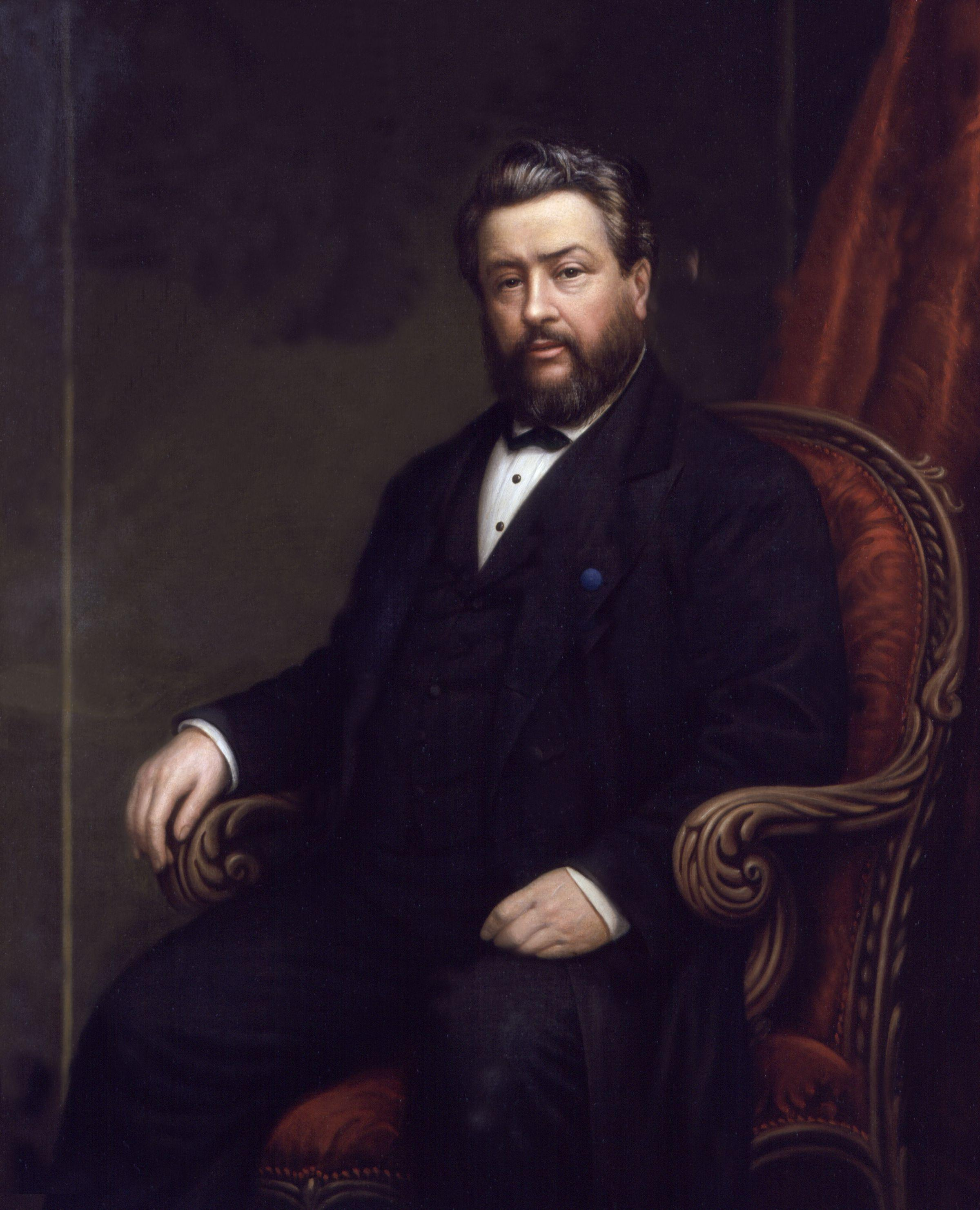
This was not what caught my interest, however. Right below the account of Holls' memorial was an obituary for the widow of the famous British Baptist pastor Charles Haddon Spurgeon. The main emphasis of the obituary that struck me was the mention of both Charles and Susannah Spurgeon's generosity. The obituary stated: "In 1879 Mr. Spurgeon's congregation, on the occasion of his silver wedding, presented a purse containing 6,000 [pounds sterling] to him. He immediately divided the money between the Orphanage, Pastor's College, and other institutions he founded."
A sum such as that provided to the Spurgeons would no doubt have been equivalent to several years' wages for an average Briton in 1879. He was a mega-church pastor before anyone had heard of the mega-church. He is still regarded one of the more influential figures in Baptist history. How many modern American ministers would be inclined to give such a sizable sum away today? While most ministers are no doubt in the ministry for the good of their parishioners, there are those who are infamous for their flaunting of wealth--be it clothing, cars, or houses. I won't mention names, but one comes to mind that was on basically every TV station early in the morning during my high school years.
The church could use a few more Spurgeons in my opinion (on so many levels).

Last summer, as I've mentioned previously here and here on this site, I had an internship with the Theodore Roosevelt Center at Dickinson State University. That internship with the digital library gave me an opportunity to research all sorts of seemingly random people. Most of the documents I reviewed were letters to President Roosevelt or one of his close associates. The authors of these letters could at times be quite famous people, such as Elihu Root, Henry Cabot Lodge, or Mark Hanna (those with knowledge of the Progressive Era will find these names familiar). At times, they would be unknown to me.
Finding the names of these less-well-known individuals in the correspondence would invariable lead to that all-too-twentieth-century research tool--the Google search. At times, these folks were like ghosts...nonexistent. At other times, I would learn some interesting information. One of the people that I had to research in this manner was a New York Judge by the name of F. W. Holls. He was influential in leading a famous peace delegation at the Hague. My search for Judge Holls led me to the New York Times' October 23, 1903, edition. Old NYT articles are available for search on the web, and they were invaluable for me over the summer. Holls died in July of that year, and President Roosevelt sent a personal eulogy to be read at the memorial service.
This was not what caught my interest, however. Right below the account of Holls' memorial was an obituary for the widow of the famous British Baptist pastor Charles Haddon Spurgeon. The main emphasis of the obituary that struck me was the mention of both Charles and Susannah Spurgeon's generosity. The obituary stated: "In 1879 Mr. Spurgeon's congregation, on the occasion of his silver wedding, presented a purse containing 6,000 [pounds sterling] to him. He immediately divided the money between the Orphanage, Pastor's College, and other institutions he founded."
A sum such as that provided to the Spurgeons would no doubt have been equivalent to several years' wages for an average Briton in 1879. He was a mega-church pastor before anyone had heard of the mega-church. He is still regarded one of the more influential figures in Baptist history. How many modern American ministers would be inclined to give such a sizable sum away today? While most ministers are no doubt in the ministry for the good of their parishioners, there are those who are infamous for their flaunting of wealth--be it clothing, cars, or houses. I won't mention names, but one comes to mind that was on basically every TV station early in the morning during my high school years.
The church could use a few more Spurgeons in my opinion (on so many levels).
15 January 2012
Catholics, Evangelical Protestants, and a Shift in Presidential Politics
Yesterday, as I read some of the news headlines on the interweb, I came across one that dealt with the endorsement that some evangelical voters gave to Rick Santorum. It's not terribly surprising that evangelicals rejected Mitt Romney because of his Mormonism and his supposed liberal tendencies. Of course, Romney may not know whether he's a conservative, liberal, or something totally different. The evangelical voters considered Santorum, Newt Gingrich, and Rick Perry. The very fact that they chose Santorum shows a significant shift in American Protestant politics over the past few decades.
A major party has nominated a Roman Catholic for president three times. Each time, it's been the Democrats that have done so. The first Catholic to run for president was Al Smith of New York in 1928. He lost to Herbert Hoover, and those who lived through the Depression blame Hoover for that debacle to this day, but that's another story. Hoover won a landslide largely because a Republican was in office and the economy seemed to be booming. However, there was also the frequent assertion that the Democrats were the party of "Rum, Romanism, and Rebellion." The 1920s was a period that saw the growth of the second Ku Klux Klan, and Catholics were one of the major groups that these nativists saw as damaging Americanism with their taking orders from Rome. There was concern that a Smith presidency would subordinate itself to the pope, not the Constitution.
Fast-forward just over thirty years. In 1960, another Catholic ran for president. The concern over a president having more allegiance to the Vatican than the US was a big concern for many Protestants. The candidate for president this time was John F. Kennedy. A 2007 article in Baptist History & Heritage by Ricky Floyd Dobbs examined the concern that conservative Baptists had regarding a Catholic running for president, using the Texas Baptist Standard as a case study. Kennedy won, and he is to date the only Catholic to become president. While some Americans would view him as a liberal, and his presidency was shortened by an assassins' bullet, most people would not argue that Kennedy put the concerns of the Vatican above those of America.
In 2004, John Kerry ran for president against the incumbent George W. Bush. His Catholicism was not the major issue, as the fear of terrorism seemed to be the overarching topic in this election. That was a general election, however, and evangelicals have tended to web themselves to the Republican Party in the last few decades. Most of the Republican candidates over time have been WASPs, with few women, minorities, and non-Protestants attempting a run. This year, evangelicals chose between Santorum, Gingrich, and Perry. Of the three, Perry would be the closest candidate to an evangelical. However, he's come across as less-than-presidential in debates and other public appearances. That leaves Santorum and Gingrich, both Catholics, as the best hope for pro-life, anti-Mormon evangelicals. While Romney's stand on abortion can be questioned, John Huntsman, another Mormon, seems to be solidly pro-life.
All of this goes to show the major change in Protestant attitudes toward Catholicism. Catholics are now considered more mainstream to evangelical voters. Mormons are not. Could this shift signal the election of a President Santorum? Not likely, but the change over time is nonetheless interesting.
A major party has nominated a Roman Catholic for president three times. Each time, it's been the Democrats that have done so. The first Catholic to run for president was Al Smith of New York in 1928. He lost to Herbert Hoover, and those who lived through the Depression blame Hoover for that debacle to this day, but that's another story. Hoover won a landslide largely because a Republican was in office and the economy seemed to be booming. However, there was also the frequent assertion that the Democrats were the party of "Rum, Romanism, and Rebellion." The 1920s was a period that saw the growth of the second Ku Klux Klan, and Catholics were one of the major groups that these nativists saw as damaging Americanism with their taking orders from Rome. There was concern that a Smith presidency would subordinate itself to the pope, not the Constitution.
Fast-forward just over thirty years. In 1960, another Catholic ran for president. The concern over a president having more allegiance to the Vatican than the US was a big concern for many Protestants. The candidate for president this time was John F. Kennedy. A 2007 article in Baptist History & Heritage by Ricky Floyd Dobbs examined the concern that conservative Baptists had regarding a Catholic running for president, using the Texas Baptist Standard as a case study. Kennedy won, and he is to date the only Catholic to become president. While some Americans would view him as a liberal, and his presidency was shortened by an assassins' bullet, most people would not argue that Kennedy put the concerns of the Vatican above those of America.
In 2004, John Kerry ran for president against the incumbent George W. Bush. His Catholicism was not the major issue, as the fear of terrorism seemed to be the overarching topic in this election. That was a general election, however, and evangelicals have tended to web themselves to the Republican Party in the last few decades. Most of the Republican candidates over time have been WASPs, with few women, minorities, and non-Protestants attempting a run. This year, evangelicals chose between Santorum, Gingrich, and Perry. Of the three, Perry would be the closest candidate to an evangelical. However, he's come across as less-than-presidential in debates and other public appearances. That leaves Santorum and Gingrich, both Catholics, as the best hope for pro-life, anti-Mormon evangelicals. While Romney's stand on abortion can be questioned, John Huntsman, another Mormon, seems to be solidly pro-life.
All of this goes to show the major change in Protestant attitudes toward Catholicism. Catholics are now considered more mainstream to evangelical voters. Mormons are not. Could this shift signal the election of a President Santorum? Not likely, but the change over time is nonetheless interesting.
12 January 2012
Racists, Christianity, and the Antebellum South
One of the biggest oxymorons that I've run across are Christian racists. The two terms don't really go together. Yet, many people in the pre-Civil War South claimed Christianity while simultaneously having few qualms about owning other people. The quarterly journal of the Baptist History and Heritage Society, conveniently named Baptist History & Heritage, recently arrived at my house. Since I had not yet begun my studies for the semester, I had a chance to read through the articles.
The article in the Fall 2011 issue of the journal that most caught my attention was "Pastor Elias Lyman Magoon, the Education of Blacks, and his 1846 Departure from Second Baptist Church, Richmond, Virginia," by Craig A Sherouse, who is currently the pastor of Second Baptist Church in Richmond. Sherouse's article deals with on of the biggest concepts that historians study: change over time. The change that he recounts in this article deals with racial attitudes in nineteenth century Richmond. While Virginians were nowhere near the most progressive of people when it came to race, in 1813, they were much more tolerant than they would become by 1846.
In 1813, William H. Crane and Elder David Roper formed a school for free and slave black students in Richmond. From this school came the missionary team of Lott Carey and Collin Teage, who became Baptist missionaries to the new African nation of Liberia. Crane was at the meeting that formed the Southern Baptist Convention (formed because the some in the Baptist Triennial Convention rightly refused to commission slaveholding missionaries), and his son William Carey Crane became president of Baylor University. A finding about another sons, Adoniram Judson Crane, surprised Sherouse, however. A. J. Crane was a memeber of a committee that brought a report against Second Baptist's pastor, Elias Lyman Magoon, and recommended Magoon's "separation" from the church.
Why did Magoon incur the wrath of this congregation? He had been quite popular before took leave to travel to Europe for study. Sherouse writes: "What was the dismissible charge brought against Pastor Magoon? Advocating in the pulpit and in print the education of blacks, both slave and free--the same ministry that A. J. Crane's father had done thirty years earlier, that which had eventuated in Cary and Teage constituting a church in William Crane's parlor. How ironic to make that discovery while seated under the painting of that historic event."
What changed over the course of thirty years? Sherouse points out that the laws of Virginia changed. The education of African Americans became illegal after the Nat Turner Rebellion of 1831, led somewhat ironically by a Baptist minister. Other laws prohibited the meeting of blacks at night and the meeting of blacks without white supervision. Baptists in Richmond felt that Magoon's advocation for blacks too much to bear, and they asked him to leave. Other articles in this edition of the journal were David Stratton's "James Madison, Persecuted Baptists, and Religious Liberty," Gary P. Burton's "Armistead Thomson Mason Handey: The Unusual Life and Times of a Nineteenth-Century Church Planter and Pastor in Central Alabama," T. Laine Scales and Craig R. Clarkson's "Preparing College Graduates for Mission: The Role of the Student Volunteer Movement in the Calling and Formation of a 'Baylor Girl,' 1903-1907," and Aaron Douglas Weaver's "'Not in My Backyard' to 'Not in Anyone's Backyard': Black Baptists, the Black Church, and the Environmental Justice Movement."
This was one of the most interesting issues of the journal that I've read. I mention the Sherouse article at length because of the major issue that race continues to be, even among people who claim to be Christian. While much has changed, underlying attitudes often remain the same. Sherouse's article shows how easy it is for Christians to conform to the culture around them. This problem is definitely one to be avoided.
The article in the Fall 2011 issue of the journal that most caught my attention was "Pastor Elias Lyman Magoon, the Education of Blacks, and his 1846 Departure from Second Baptist Church, Richmond, Virginia," by Craig A Sherouse, who is currently the pastor of Second Baptist Church in Richmond. Sherouse's article deals with on of the biggest concepts that historians study: change over time. The change that he recounts in this article deals with racial attitudes in nineteenth century Richmond. While Virginians were nowhere near the most progressive of people when it came to race, in 1813, they were much more tolerant than they would become by 1846.
In 1813, William H. Crane and Elder David Roper formed a school for free and slave black students in Richmond. From this school came the missionary team of Lott Carey and Collin Teage, who became Baptist missionaries to the new African nation of Liberia. Crane was at the meeting that formed the Southern Baptist Convention (formed because the some in the Baptist Triennial Convention rightly refused to commission slaveholding missionaries), and his son William Carey Crane became president of Baylor University. A finding about another sons, Adoniram Judson Crane, surprised Sherouse, however. A. J. Crane was a memeber of a committee that brought a report against Second Baptist's pastor, Elias Lyman Magoon, and recommended Magoon's "separation" from the church.
Why did Magoon incur the wrath of this congregation? He had been quite popular before took leave to travel to Europe for study. Sherouse writes: "What was the dismissible charge brought against Pastor Magoon? Advocating in the pulpit and in print the education of blacks, both slave and free--the same ministry that A. J. Crane's father had done thirty years earlier, that which had eventuated in Cary and Teage constituting a church in William Crane's parlor. How ironic to make that discovery while seated under the painting of that historic event."
What changed over the course of thirty years? Sherouse points out that the laws of Virginia changed. The education of African Americans became illegal after the Nat Turner Rebellion of 1831, led somewhat ironically by a Baptist minister. Other laws prohibited the meeting of blacks at night and the meeting of blacks without white supervision. Baptists in Richmond felt that Magoon's advocation for blacks too much to bear, and they asked him to leave. Other articles in this edition of the journal were David Stratton's "James Madison, Persecuted Baptists, and Religious Liberty," Gary P. Burton's "Armistead Thomson Mason Handey: The Unusual Life and Times of a Nineteenth-Century Church Planter and Pastor in Central Alabama," T. Laine Scales and Craig R. Clarkson's "Preparing College Graduates for Mission: The Role of the Student Volunteer Movement in the Calling and Formation of a 'Baylor Girl,' 1903-1907," and Aaron Douglas Weaver's "'Not in My Backyard' to 'Not in Anyone's Backyard': Black Baptists, the Black Church, and the Environmental Justice Movement."
This was one of the most interesting issues of the journal that I've read. I mention the Sherouse article at length because of the major issue that race continues to be, even among people who claim to be Christian. While much has changed, underlying attitudes often remain the same. Sherouse's article shows how easy it is for Christians to conform to the culture around them. This problem is definitely one to be avoided.
22 December 2011
Christmas in American History
Different Christian groups throughout American history have celebrated Christmas in many different ways. Some have totally ignored the holiday, others have been quite festive. Christmas itself was not a national holiday until declared so by President Ulysses S. Grant in 1870. That is not to say that many people totally ignored the holiday before this date.
Just today, I read an article on Christmas in Revolutionary America by Thomas Kidd. Apparently, some people at this time had a major problem with the revelry, especially from the lower sort. Kidd points out some of the gifts that people gave (mostly wealthier individuals to relatively poorer people) and the signs that commercialism was becoming a characteristic of Christmas at that date.
The accounts that Kidd listed were based in New York, a cosmopolitan town even at this early date. Other groups viewed Christmas as a pagan ritual that true Christians should avoid. In New England, the early Puritan settlers had a legal ban on the celebration of Christmas. Celebration of Christmas could apparently lead to fines of up to five shillings. The ban on Christmas ended in 1680, but many people continued downplaying the holiday. Schools in Boston scheduled classes on Christmas day until the 1870s and punished those who skipped out to celebrate.
Baptist groups tended to downplay Christmas until the late nineteenth century, as well. A short article by Bruce Gourley on Baptist celebrations of Christmas indicated that early American Baptists continued their general day-to-day lives on Christmas. The first Baptist educational endeavor in America, Isaac Eaton's Hopewell Academy, scheduled classes on Christmas in 1757. Eaton refused to celebrate Christmas because Jesus was not born on that day. Gourley's article points out some interesting changes in Baptist churches over the nineteenth century that tended to follow trends in American society.
It would seem that the legitimization of Christmas by President Grant helped in removing some of the stigma associated with the holiday in some circles. Even today, however, some groups claiming to be Christian refuse to celebrate the Christmas holiday. I am not among these groups, and although I have a major problem with the commercial aspect of things, I still celebrate with friends and family at this time of year. So, to those who read this, I would like to wish you a Merry Christmas and a Happy New Year.
Just today, I read an article on Christmas in Revolutionary America by Thomas Kidd. Apparently, some people at this time had a major problem with the revelry, especially from the lower sort. Kidd points out some of the gifts that people gave (mostly wealthier individuals to relatively poorer people) and the signs that commercialism was becoming a characteristic of Christmas at that date.
The accounts that Kidd listed were based in New York, a cosmopolitan town even at this early date. Other groups viewed Christmas as a pagan ritual that true Christians should avoid. In New England, the early Puritan settlers had a legal ban on the celebration of Christmas. Celebration of Christmas could apparently lead to fines of up to five shillings. The ban on Christmas ended in 1680, but many people continued downplaying the holiday. Schools in Boston scheduled classes on Christmas day until the 1870s and punished those who skipped out to celebrate.
Baptist groups tended to downplay Christmas until the late nineteenth century, as well. A short article by Bruce Gourley on Baptist celebrations of Christmas indicated that early American Baptists continued their general day-to-day lives on Christmas. The first Baptist educational endeavor in America, Isaac Eaton's Hopewell Academy, scheduled classes on Christmas in 1757. Eaton refused to celebrate Christmas because Jesus was not born on that day. Gourley's article points out some interesting changes in Baptist churches over the nineteenth century that tended to follow trends in American society.
It would seem that the legitimization of Christmas by President Grant helped in removing some of the stigma associated with the holiday in some circles. Even today, however, some groups claiming to be Christian refuse to celebrate the Christmas holiday. I am not among these groups, and although I have a major problem with the commercial aspect of things, I still celebrate with friends and family at this time of year. So, to those who read this, I would like to wish you a Merry Christmas and a Happy New Year.
08 December 2011
Southern Baptist Name Change?
Is a big change in the cards for the nation's largest Protestant denomination? A couple of articles I've seen in the past few days indicates that it could be. The Southern Baptist Convention, which is the largest non-Catholic denomination in the United States, is considering changing its name after a poll indicated that 40% of Americans would refuse to go to one of their churches.
In the era of the mega-church, we've seen the influence of marketing strategies and the equivalent of customer satisfaction surveys. Is this just one more attempt to cater to the public at large? Or is it actually, as Convention President Bryan Wright said, just an attempt to remove barriers that turn people away. The association is apparently not removing Baptist from their name, so there will still be a tie to the historical "denomination" (some Baptists don't like being thought of as a denomination).
One of the reason for this consideration is a downward trend in memberships. In the current market-driven environment, it is quite easy for people to just leave a congregation that they don't like and find another. In the days before the Second Great Awakening, this was more difficult. Historian Nathan Hatch emphasized the democratization of American Christianity that this event brought about. With this democratization, and earlier moves to religious toleration, the power of state churches eroded immensely (the Congregational Church remained established in some New England States into the 19th century). This brought the ability for people choose their congregations more easily.
There could be the question of whether this would change the theological and doctrinal stands to which Southern Baptists have traditionally held? Church officials argue that it won't. If so, they probably won't change people's opinion of them with a simple name change. The question then becomes, if they truly hold these offensive beliefs dearly, why would they really want to change?
Please note that I'm not discussing issues related to nineteenth-century opinions about slavery or anything related to race. I'm only concerned with doctrinal/theological issues. Any thoughts or comments are appreciated.
In the era of the mega-church, we've seen the influence of marketing strategies and the equivalent of customer satisfaction surveys. Is this just one more attempt to cater to the public at large? Or is it actually, as Convention President Bryan Wright said, just an attempt to remove barriers that turn people away. The association is apparently not removing Baptist from their name, so there will still be a tie to the historical "denomination" (some Baptists don't like being thought of as a denomination).
One of the reason for this consideration is a downward trend in memberships. In the current market-driven environment, it is quite easy for people to just leave a congregation that they don't like and find another. In the days before the Second Great Awakening, this was more difficult. Historian Nathan Hatch emphasized the democratization of American Christianity that this event brought about. With this democratization, and earlier moves to religious toleration, the power of state churches eroded immensely (the Congregational Church remained established in some New England States into the 19th century). This brought the ability for people choose their congregations more easily.
There could be the question of whether this would change the theological and doctrinal stands to which Southern Baptists have traditionally held? Church officials argue that it won't. If so, they probably won't change people's opinion of them with a simple name change. The question then becomes, if they truly hold these offensive beliefs dearly, why would they really want to change?
Please note that I'm not discussing issues related to nineteenth-century opinions about slavery or anything related to race. I'm only concerned with doctrinal/theological issues. Any thoughts or comments are appreciated.
01 December 2011
American Churches and Racism
Why are churches some of the most segregated places around in America today? I've often wondered this, and I must say that it really, really bugs me. Race is obviously a contentious issue in American history. One need not look any farther than the relations between new seventeenth-century settlers and group that these Anglo-Americans drove out of their homeland (American Indians) and between the same Anglo-American settlers and a group (African slaves) that they brought across the Atlantic against their wills. Some people would argue that racism is largely gone today. Then a story like the following shows up in the news. Just recently, a Kentucky church voted to exclude interracial couples from membership.
Moves like this definitely show that racism is far from dead. Would the interracial character of the relationship been a big deal to those that voted to exclude the couple if the non-white member had been a Christian from Turkey, Korea, or Brazil, rather than Africa? The answer can't be known definitely, but it seems that black/white relationships seem to draw the biggest complaint. Of course, this goes against Paul's writings about there being no distinctions in the body of Christ (see Galatians 3:28, which ironically, considering American history, put slaves and masters on the same level).
Racism and bigotry have been very common throughout American history. A recent post on the Religion in American History blog talks about some of the recent directions in the historiography of the Ku Klux Klan. This post was quite interesting. I've also read a couple of interesting works lately on the topic of bigotry.
One was Lynn Neal's article in the June 2009 issue of Church History, "Christianizing the Klan." This article showed how KKK sympathizers used images in their literature that depicted the Klan in Christian and 100% American terms against Catholics, Jews, unions, etc. A good recent work on anti-Catholic journalism in the Progressive Era is Justin Nordstrom's Danger on the Doorstep. The anti-Catholic publication, The Menace, had the second-highest subscription rate in America for a time. All of this tied to the idea of 100% Americanism, which the KKK endorsed. I was also doing some research recently on a totally unrelated subject, and a minister's autobiography (Albert F. Gray) told of a service that he attended (I believe it was Washington State) in which some men in robes came in, presented an American flag, and left. Although the book did not identify said men, I assume that it was some Klansmen given the time period and this practice. (I posted the previous paragraph as a comment on the American religion blog post noted above).
This 100% Americanism has shown up in much of my research on Grand Forks, North Dakota, religious history. A Baptist church, which I've mentioned in a couple of conference papers that I've posted here, definitely believed in American exceptionalism and thought that the rest of the world should become English-speaking American-style democrats against WWI-era German autocrats. A Lutheran church in town that I've studied transferred to English-speaking services around the same time that there were moves for 100% Americanism. While I can see the desire for people to speak the same language as others, because it's difficult to communicate without speaking the same language, I don't think that a proper understanding of Christianity allows for the blatant racism that many in American history have fostered (and apparently continue to foster) in their churches. I would personally argue that it makes the church as a whole look bad to society. However, it's just a reflection of the view of people who vote this way in church meetings.
Moves like this definitely show that racism is far from dead. Would the interracial character of the relationship been a big deal to those that voted to exclude the couple if the non-white member had been a Christian from Turkey, Korea, or Brazil, rather than Africa? The answer can't be known definitely, but it seems that black/white relationships seem to draw the biggest complaint. Of course, this goes against Paul's writings about there being no distinctions in the body of Christ (see Galatians 3:28, which ironically, considering American history, put slaves and masters on the same level).
Racism and bigotry have been very common throughout American history. A recent post on the Religion in American History blog talks about some of the recent directions in the historiography of the Ku Klux Klan. This post was quite interesting. I've also read a couple of interesting works lately on the topic of bigotry.
One was Lynn Neal's article in the June 2009 issue of Church History, "Christianizing the Klan." This article showed how KKK sympathizers used images in their literature that depicted the Klan in Christian and 100% American terms against Catholics, Jews, unions, etc. A good recent work on anti-Catholic journalism in the Progressive Era is Justin Nordstrom's Danger on the Doorstep. The anti-Catholic publication, The Menace, had the second-highest subscription rate in America for a time. All of this tied to the idea of 100% Americanism, which the KKK endorsed. I was also doing some research recently on a totally unrelated subject, and a minister's autobiography (Albert F. Gray) told of a service that he attended (I believe it was Washington State) in which some men in robes came in, presented an American flag, and left. Although the book did not identify said men, I assume that it was some Klansmen given the time period and this practice. (I posted the previous paragraph as a comment on the American religion blog post noted above).
This 100% Americanism has shown up in much of my research on Grand Forks, North Dakota, religious history. A Baptist church, which I've mentioned in a couple of conference papers that I've posted here, definitely believed in American exceptionalism and thought that the rest of the world should become English-speaking American-style democrats against WWI-era German autocrats. A Lutheran church in town that I've studied transferred to English-speaking services around the same time that there were moves for 100% Americanism. While I can see the desire for people to speak the same language as others, because it's difficult to communicate without speaking the same language, I don't think that a proper understanding of Christianity allows for the blatant racism that many in American history have fostered (and apparently continue to foster) in their churches. I would personally argue that it makes the church as a whole look bad to society. However, it's just a reflection of the view of people who vote this way in church meetings.
05 September 2011
Progressive Baptists
Saturday was a pretty good day in my estimation. The weather wasn't the best, with temps around 65 and steady North winds, there was a reminder that a wonderful North Dakota winter is nearing. So, it wasn't the weather that was great. I did, however, get a couple of historical publications, one of which was Baptist History and Heritage.
This edition of Baptist History and Heritage focuses on the 50th anniversary of the Progressive National Baptist Convention, an African American denomination. While the fact that this is one of the 276 (probably a bit of an exaggeration, but not by much) Baptist denominations in America is not surprising or unique. What is unique is the origin of this organization. Frustration with one of the leading black Baptist groups, the National Baptist Convention, over issues of Civil Rights led those who were more committed to complete equality (including Martin Luther King, Jr.) to split off from the parent organization in 1961.
While I've not read the entire journal yet, I've found the first couple of articles pretty interesting. One question that always comes to my mind when looking at churches and racial issues is why there are churches and racial issues. Some of the most segregated groups in America today are churches. There are "white churches" and "black churches." I can understand ethnic churches or specific ethnic ministries for immigrants because of the language barrier. However, even though cultures can be very different between ethnic groups, it seems that the whole "no Jew or Greek, male or female, etc." from Paul would preclude divisions based upon differences in culture when language is not an issue. However, I guess it should not be surprising from a glance at some of Paul's letters (especially the one to the Galatians) that show problems between racial groups. While it isn't surprising, it should not be thought of as ideal in any way. Differing core theology would be a good reason for division, while ethnicity should not be a reason for division.
With the word "Progressive" in the title, perhaps a definition is in order. Today, political discourse at times seems to equate progressive with radical communists intent on overthrowing the established order. In much of American history, this was not necessarily the case. Theodore Roosevelt (a "progressive" president) was not interested in overthrowing capitalism or America, but rather in righting some serious problems that actually threatened to destroy "the system." The idea of progress has generally been considered a positive, as it generally indicates an attempt at improvement. While social activism is not exactly the main purpose of the church (in a general sense) in the world, in the area of race relations, a group that pushed the envelope for equality and integration deserves applause for their push in that direction.
This edition of Baptist History and Heritage focuses on the 50th anniversary of the Progressive National Baptist Convention, an African American denomination. While the fact that this is one of the 276 (probably a bit of an exaggeration, but not by much) Baptist denominations in America is not surprising or unique. What is unique is the origin of this organization. Frustration with one of the leading black Baptist groups, the National Baptist Convention, over issues of Civil Rights led those who were more committed to complete equality (including Martin Luther King, Jr.) to split off from the parent organization in 1961.
While I've not read the entire journal yet, I've found the first couple of articles pretty interesting. One question that always comes to my mind when looking at churches and racial issues is why there are churches and racial issues. Some of the most segregated groups in America today are churches. There are "white churches" and "black churches." I can understand ethnic churches or specific ethnic ministries for immigrants because of the language barrier. However, even though cultures can be very different between ethnic groups, it seems that the whole "no Jew or Greek, male or female, etc." from Paul would preclude divisions based upon differences in culture when language is not an issue. However, I guess it should not be surprising from a glance at some of Paul's letters (especially the one to the Galatians) that show problems between racial groups. While it isn't surprising, it should not be thought of as ideal in any way. Differing core theology would be a good reason for division, while ethnicity should not be a reason for division.
With the word "Progressive" in the title, perhaps a definition is in order. Today, political discourse at times seems to equate progressive with radical communists intent on overthrowing the established order. In much of American history, this was not necessarily the case. Theodore Roosevelt (a "progressive" president) was not interested in overthrowing capitalism or America, but rather in righting some serious problems that actually threatened to destroy "the system." The idea of progress has generally been considered a positive, as it generally indicates an attempt at improvement. While social activism is not exactly the main purpose of the church (in a general sense) in the world, in the area of race relations, a group that pushed the envelope for equality and integration deserves applause for their push in that direction.
02 September 2011
Church History through Maps
This semester, I'm again doing some research on local religion. Last fall, I wrote a fairly lengthy paper on a local Baptist Church to which I've made some comments on this blog (even going so far as to post an entire paper that I read at the Red River Valley History Conference). This fall, I'm working on a church building that housed a couple of different congregations over a period of about 100 years. The building is about to be torn down, as it has been empty since the Grand Forks Flood of 1997. More about the history of this specific church at a later date.
Today, I spent about three hours in the special collections department of the Chester Fritz Library. I usually go through documentary evidence for my research, which would include letters, manuscripts, church records, etc. On this trip, however, I utilized a resource of which I was basically unaware until the last couple of weeks. Sanborn maps are a great resource for understanding the historical landscape of cities. The main users of Sanborn maps were originally fire insurance companies. The maps show the streetscapes of urban areas, complete with color coding to depict the specific building materials utilized in the erection of the respective structures. Building materials are obviously of particular interest to fire insurers.
The library has maps from various intervals in the late nineteenth and early twentieth centuries. Several things are evident from a perusal of these maps. I checked out maps from 1884, 1888, 1892, 1897, and 1901, and I still have several to investigate. One thing that is evident from the maps that I looked at today is that the number of churches in Grand Forks grew from 5 to 13 from 1884 to 1897. The number remained steady at 13 in 1901. Another interesting point that is apparent from looking at the map is that the older, more established churches had structures that employed more durable materials. One negative to the use of wood is the threat of fire. Stone and brick are not quite as susceptible to fire damage. One final thing that I found quite interesting was the growth of ethnic churches over the period. The original five churches remained--Catholic, Baptist, Methodist Episcopal, Presbyterian, and Episcopal. To the original five, the city saw the addition of Norwegian Baptists and Scandinavian Lutherans, among others. These ethnic names are not nearly as obvious today. The rise and decline of specifically ethnic churches is an avenue that I find of interest, and one that I intend to investigate. I will post some of my findings of interest in the comings months.
Today, I spent about three hours in the special collections department of the Chester Fritz Library. I usually go through documentary evidence for my research, which would include letters, manuscripts, church records, etc. On this trip, however, I utilized a resource of which I was basically unaware until the last couple of weeks. Sanborn maps are a great resource for understanding the historical landscape of cities. The main users of Sanborn maps were originally fire insurance companies. The maps show the streetscapes of urban areas, complete with color coding to depict the specific building materials utilized in the erection of the respective structures. Building materials are obviously of particular interest to fire insurers.
The library has maps from various intervals in the late nineteenth and early twentieth centuries. Several things are evident from a perusal of these maps. I checked out maps from 1884, 1888, 1892, 1897, and 1901, and I still have several to investigate. One thing that is evident from the maps that I looked at today is that the number of churches in Grand Forks grew from 5 to 13 from 1884 to 1897. The number remained steady at 13 in 1901. Another interesting point that is apparent from looking at the map is that the older, more established churches had structures that employed more durable materials. One negative to the use of wood is the threat of fire. Stone and brick are not quite as susceptible to fire damage. One final thing that I found quite interesting was the growth of ethnic churches over the period. The original five churches remained--Catholic, Baptist, Methodist Episcopal, Presbyterian, and Episcopal. To the original five, the city saw the addition of Norwegian Baptists and Scandinavian Lutherans, among others. These ethnic names are not nearly as obvious today. The rise and decline of specifically ethnic churches is an avenue that I find of interest, and one that I intend to investigate. I will post some of my findings of interest in the comings months.
15 July 2011
Christian Blog Carnival and other Links
The Christian Blog Carnival for the week has been posted on Beyond Belief. Several different posts on Christian-related topics are featured, including one from this blog. This carnival is a weekly edition that posts links submitted by various Christian bloggers. Some are related to history, others to theology, and still others to apologetics. Christian living and Christian finance are also posted on this site.
While searching the web, I also found a site that lists several blogs by/about Baptists and their (many times) varying belief. This site is somewhat interesting in that it actually color codes what viewpoint the authors come from.
I will post yet another link. This site lists the Top 50 Evangelical Christian blogs and posts them in different categories for easier classification. While nothing is necessarily new or terribly thought-provoking in this post, perhaps the links will provide food for thought for students of Christianity and/or American church history.
While searching the web, I also found a site that lists several blogs by/about Baptists and their (many times) varying belief. This site is somewhat interesting in that it actually color codes what viewpoint the authors come from.
I will post yet another link. This site lists the Top 50 Evangelical Christian blogs and posts them in different categories for easier classification. While nothing is necessarily new or terribly thought-provoking in this post, perhaps the links will provide food for thought for students of Christianity and/or American church history.
13 July 2011
2011 Merrifield Prize Winning Paper
Back in April, I submitted a paper that I wrote in the fall semester on Baptists in Grand Forks during the Progressive and World War I eras. The submissions had to make use of the Special Collections at the Chester Fritz Library on the campus of the University of North Dakota. Mine utilized that collection extensively, so I decided to submit, in spite of finding out about the competition about two days before the deadline.
Here is the press release regarding the outcome of the competition. I would post the entire paper on my site, but I submitted it to a journal, and I don't know how the journal in question would view that kind of thing. Here is a link to a revised portion of the paper that I previously posted on this site and that won the best graduate paper at the 2011 Red River Valley History Conference. I will post another revision of another portion after I read it at the 2011 Northern Great Plains History Conference.
Here is the press release regarding the outcome of the competition. I would post the entire paper on my site, but I submitted it to a journal, and I don't know how the journal in question would view that kind of thing. Here is a link to a revised portion of the paper that I previously posted on this site and that won the best graduate paper at the 2011 Red River Valley History Conference. I will post another revision of another portion after I read it at the 2011 Northern Great Plains History Conference.
11 July 2011
The Civil War and Baptists
I'm sure that among those who have an interest in American church history, there are many who are also interested in the American Civil War. Special collections exist that are dedicated entirely to this conflict. There are several accounts of a revival that broke out on both sides of the conflict. A minister, J. William Jones, penned a well-known account of this revival in his work titled Christ in the Camp. Jones tells of baptizing hundreds of new converts. The Civil War saw foxhole religion at its finest.
Upon perusing the web a couple of days ago, I found a website that is dedicated to Baptist activity during the Civil War. Baptists and the American Civil War is a site that includes documentary evidence that corresponds to each day of the war, beginning with a commemoration of the 150th anniversary of the firing on Fort Sumter. Baptists and the American Civil War is a digital project conceived by Bruce Gourley of the Baptist History and Heritage Society, although it appears that the site has multiple contributors. A new entry appears each day, so those with an interest in the Civil War will find much to occupy their time. In addition to those with a general interest in Civil War history, those with curiosity geared toward Baptist history may find even more of interest.
Upon perusing the web a couple of days ago, I found a website that is dedicated to Baptist activity during the Civil War. Baptists and the American Civil War is a site that includes documentary evidence that corresponds to each day of the war, beginning with a commemoration of the 150th anniversary of the firing on Fort Sumter. Baptists and the American Civil War is a digital project conceived by Bruce Gourley of the Baptist History and Heritage Society, although it appears that the site has multiple contributors. A new entry appears each day, so those with an interest in the Civil War will find much to occupy their time. In addition to those with a general interest in Civil War history, those with curiosity geared toward Baptist history may find even more of interest.
06 July 2011
Historic Baptist Documents--Link with Early and Modern Confessions of Faith
I grew up in a Baptist Church, and I have attended Baptist churches for most of my life. I am very much interested in Baptist history. Because of this interest, I'm a member of the Baptist History & Heritage Society. Because of this interest, I took a course in Baptist history as part of my (unfortunately uncompleted) seminary studies. Because of this interest, much of my historical research has involved the study of Baptists on one level or another, either in the study of an individual or in the study of a local church.
My interest in Baptist history causes me to wonder what Baptists have believed over their history. Beginning in the seventeenth century (sixteenth if one holds to an Anabaptist spiritual kinship view of Baptist history, which I personally find fairly plausible), Baptists began recording their beliefs in their confessions of faith. Baptist Associations on both sides of the Atlantic wrote down systematic articles that described their beliefs, generally backing them up with specific biblical passages. Many of these historic Baptist confessions are available online.
I have not perused all of the website in question, so I cannot say that I would definitely agree with all that is posted in the link provided above. However, I would argue that the posting of these historic documents is a valuable service to Baptists interested in their heritage. I would urge anyone interested in Baptist history specifically or church history in general to check out these documents. What you learn may surprise you in some ways.
My interest in Baptist history causes me to wonder what Baptists have believed over their history. Beginning in the seventeenth century (sixteenth if one holds to an Anabaptist spiritual kinship view of Baptist history, which I personally find fairly plausible), Baptists began recording their beliefs in their confessions of faith. Baptist Associations on both sides of the Atlantic wrote down systematic articles that described their beliefs, generally backing them up with specific biblical passages. Many of these historic Baptist confessions are available online.
I have not perused all of the website in question, so I cannot say that I would definitely agree with all that is posted in the link provided above. However, I would argue that the posting of these historic documents is a valuable service to Baptists interested in their heritage. I would urge anyone interested in Baptist history specifically or church history in general to check out these documents. What you learn may surprise you in some ways.
20 June 2011
Cool Opportunity that I Will (Unfortunately) Most Definitely Miss
Have you ever seen an opportunity that you just know you will have to miss? That is the quandry in which I find myself in regard to the upcoming conference on Baptists and War hosted by the Southern Baptist Theological Seminary in Louisville, Kentucky, in September. You may wonder why this particular topic is of interest to me. I recently posted some of my most current research that just happened to discuss the issue of North Dakota Baptists and World War I rhetoric. This conference appears to deal with the gamut of how Baptists have dealt with the issue of war. It appears that scheduled presentations relate to several important American, European, and World Wars, as well as the topic of peace. In a way, because of my research interests, it pains me to think that I will miss this conference, although I may have to buy any edited publications related to the papers that should be published in the future.
Those of my friends with an interest in history who live within driving distance of Louisville may find the conference of interest. Somewhat related to the conference is its host, the Andrew Fuller Center for Baptist Studies, which is directed by Dr. Michael A. G. Haykin of SBTS. The homepage of this center also includes a blog on church/Baptist history by Haykin titled Historia ecclesiastica. A quick perusal of the first page shows some pretty interesting posts that may be of interest.
Those of my friends with an interest in history who live within driving distance of Louisville may find the conference of interest. Somewhat related to the conference is its host, the Andrew Fuller Center for Baptist Studies, which is directed by Dr. Michael A. G. Haykin of SBTS. The homepage of this center also includes a blog on church/Baptist history by Haykin titled Historia ecclesiastica. A quick perusal of the first page shows some pretty interesting posts that may be of interest.
11 June 2011
Church Music part II
I recently wrote a post on a historical topic that I find of quite a bit of interest, church music. In that post, I pointed out that some considered Jonathan Edwards a bit radical for his use of hymns in church in an eighteenth-century society that emphasized only the singing of psalms from the biblical book of Psalms. This topic brought to mind an article I recently read in Baptist History & Heritage on the topic of Baptist hymnody and revivalism.
Baylor University professor of Music (somewhat ironically named) David W. Music wrote on "The Baptist Influence on Revival Music/The Revival Influence n Baptist Music" in Baptist History & Heritage's Summer/Fall 2010 edition. In this article, Music argued that the wave of revival music from the Second Great Awakening failed to move most Baptists, who as staunch Calvinists tended to view the revival with a bit of suspicion. However, as this strict Calvinism waned, so did Baptist opposition to revivalism. During the era of Dwight L. Moody, many of the new "gospel songs" found their way into the Baptist repertoire.
One of the interesting passages in this article on Baptists and revival music, was the definition of the gospel song: "The gospel song became the 'typical' revival music of the late nineteenth century because it contained a simple text that avoided theological sophistication in favor of direct appeal for salvation or renewed commitment, linked with a popular musical style that appealed to the masses." (40) Some of the songs cited by Music include such "traditional" standards such as "Nothing But the Blood," "Shall We Gather at the River," and several songs by Methodist Fanny Crosby that had music supplied by Baptist William Howard Doane (among the titles mentioned were "To God Be the Glory" and "Rescue the Perishing"). Other popular gospel songs written by Baptists were "Bringing in the Sheaves" and Throw out the Lifeline." (40-41)
What makes this article so interesting is the similarity in the argument against many "contemporary" songs: i.e. simple lyrics put to popular music. Few would argue that the songs listed above should be removed from the hymnal, but it raises the question of whether newer songs, such as "Shout to the Lord" and others of its style and provenance will make the hymnbooks of the future. If they do, there is also the question of whether the more traditional element in churches will protest. Music also pointed out that Baptists have tended to be more open to gospel songs and contemporary songs (although they have kept such old hymns as "All Hail the Power of Jesus' Name" and "When I Survey the Wondrous Cross," while more liturgical denominations have tended toward traditional hymns. This was definitely an interesting article on a very interesting topic.
Baylor University professor of Music (somewhat ironically named) David W. Music wrote on "The Baptist Influence on Revival Music/The Revival Influence n Baptist Music" in Baptist History & Heritage's Summer/Fall 2010 edition. In this article, Music argued that the wave of revival music from the Second Great Awakening failed to move most Baptists, who as staunch Calvinists tended to view the revival with a bit of suspicion. However, as this strict Calvinism waned, so did Baptist opposition to revivalism. During the era of Dwight L. Moody, many of the new "gospel songs" found their way into the Baptist repertoire.
One of the interesting passages in this article on Baptists and revival music, was the definition of the gospel song: "The gospel song became the 'typical' revival music of the late nineteenth century because it contained a simple text that avoided theological sophistication in favor of direct appeal for salvation or renewed commitment, linked with a popular musical style that appealed to the masses." (40) Some of the songs cited by Music include such "traditional" standards such as "Nothing But the Blood," "Shall We Gather at the River," and several songs by Methodist Fanny Crosby that had music supplied by Baptist William Howard Doane (among the titles mentioned were "To God Be the Glory" and "Rescue the Perishing"). Other popular gospel songs written by Baptists were "Bringing in the Sheaves" and Throw out the Lifeline." (40-41)
What makes this article so interesting is the similarity in the argument against many "contemporary" songs: i.e. simple lyrics put to popular music. Few would argue that the songs listed above should be removed from the hymnal, but it raises the question of whether newer songs, such as "Shout to the Lord" and others of its style and provenance will make the hymnbooks of the future. If they do, there is also the question of whether the more traditional element in churches will protest. Music also pointed out that Baptists have tended to be more open to gospel songs and contemporary songs (although they have kept such old hymns as "All Hail the Power of Jesus' Name" and "When I Survey the Wondrous Cross," while more liturgical denominations have tended toward traditional hymns. This was definitely an interesting article on a very interesting topic.
07 June 2011
I Get to Go to Mankato!
I get to go to Mankato!! I know it sounds too exciting to be true. Mankato, for those of you who may not be familiar is a city in southern Minnesota. Back in March, I sent in a paper proposal for the upcoming 2011 edition of the Northern Great Plains History Conference. I presented at the same conference when it was held in Grand Forks last October. Last year's presentation was my first ever presentation at a professional history conference. Some conferences seem to be open only to established historians that already have earned doctorates. The NGPHC, however, is a generalist conference that opens its doors to students. My paper last year discussed women in the West and the type of work that they did. The paper was reasonably well-received, which was a major concern, considering it was the first time that I had presented at such a conference (I had so much as sat in on only one conference previous to my presentation, so I was a bit nervous).
These presentations at academic conferences and colloquia are some of the basic expectations for obtaining faculty positions in the field of higher eduction, in addition to actual publications. Therefore, I sent in my proposal in an attempt to get another line on my CV (a fancy acronym for "curriculum vitae--the hopefully very long academic resume). In April, I received my official acceptance to the program, which will be held from September 21-24 of this year. My paper will discuss North Dakota Baptists and their nativist (a fancy word for anti-foreign and anti-Catholic) sentiments, and is tied to the paper that I already posted on this site related to North Dakota Baptists and World War I.
My presentation is tentatively scheduled for a session on "Religion"--imagine that. There appears to be only one other paper in this session, which will be on nuns in Southern Black communities during the mid-twentieth century. These conferences are a great opportunity to get positive feedback on work in progress. I am hoping to do some more work during the summer to expand this research beyond a single church to see if the conclusions that I reached previously are more widely applicable. I will post the completed paper on this site after its presentation in September.
These presentations at academic conferences and colloquia are some of the basic expectations for obtaining faculty positions in the field of higher eduction, in addition to actual publications. Therefore, I sent in my proposal in an attempt to get another line on my CV (a fancy acronym for "curriculum vitae--the hopefully very long academic resume). In April, I received my official acceptance to the program, which will be held from September 21-24 of this year. My paper will discuss North Dakota Baptists and their nativist (a fancy word for anti-foreign and anti-Catholic) sentiments, and is tied to the paper that I already posted on this site related to North Dakota Baptists and World War I.
My presentation is tentatively scheduled for a session on "Religion"--imagine that. There appears to be only one other paper in this session, which will be on nuns in Southern Black communities during the mid-twentieth century. These conferences are a great opportunity to get positive feedback on work in progress. I am hoping to do some more work during the summer to expand this research beyond a single church to see if the conclusions that I reached previously are more widely applicable. I will post the completed paper on this site after its presentation in September.
11 May 2011
Book Review from 2009
As an aspiring scholar who's just getting started, the list of my publications and scholarly presentations is quite small. Most of my work previous to my studies at UND focused upon West Virginia working class/labor history. One of my other areas of interest is Baptist history. My current research focuses upon North Dakota Baptists in the Progressive/WWI era. However, I have no current publications in this area.
My only publication in the field of Baptist history, or Church history in general, thus far, is a book review I did for the journal Baptist History & Heritage in 2009. Here is the link: http://findarticles.com/p/articles/mi_m0NXG/is_2_44/ai_n48711387/?tag=mantle_skin;content. The site does not mention me as the reviewer until the very bottom of the review, so don't be confused with the book review editor's name at the top of the website.
One of my goals with this site is to provide an avenue for comments and feedback on my work. While I have nothing other than a couple of encyclopedia articles going at the moment, I hope to get back to my research on North Dakota Baptists at some point this summer. If not, I will definitely be on it at some point during my program of study. I will plan to post working papers on my findings from time to time.
My only publication in the field of Baptist history, or Church history in general, thus far, is a book review I did for the journal Baptist History & Heritage in 2009. Here is the link: http://findarticles.com/p/articles/mi_m0NXG/is_2_44/ai_n48711387/?tag=mantle_skin;content. The site does not mention me as the reviewer until the very bottom of the review, so don't be confused with the book review editor's name at the top of the website.
One of my goals with this site is to provide an avenue for comments and feedback on my work. While I have nothing other than a couple of encyclopedia articles going at the moment, I hope to get back to my research on North Dakota Baptists at some point this summer. If not, I will definitely be on it at some point during my program of study. I will plan to post working papers on my findings from time to time.
Subscribe to:
Posts (Atom)