For the last several years, February has been designated Black History Month. One very negative aspect of American history that still evokes strong emotions was the era of slavery. In relation to many segments of society, the memories of slaves are fairly rare. Slave narratives nevertheless provide a window into the past from the viewpoint of those who were held in bondage against their will with little hope of obtaining freedom.
Some people want to forget this era in American history. I personally don't think that would be a good idea. I think it's important to use history as a tool to educate people regarding themselves. In my opinion, human nature seems to be very static. People will exploit others for their own material benefit, regardless of the moral ramifications. Slavery still exists today, although it's not based upon race. The reason? Money and greed. Racism definitely played an important role in the slavery of African Americans in the American South. I would ask the question if it would've been prevalent if people had not thought the institution would materially enrich them. I seriously doubt it. As George Santayana once stated, "Those who cannot remember the past are doomed to repeat it."
That brings me to the point of this post. My next lecture is on slavery in America. That may not seem to have much to do with American church history, but in one way it does. One of the really cool things about modern technology is the ability to record things that were impossible to save in earlier years. Beginning in 1932, twenty-three former slaves contributed oral interviews that recounted their reminiscences of their time in slavery. This oral history is interesting to say the least. I am planning to utilize a video of one of these interviews in class to give students the opportunity to hear first-hand what former slaves thought of the institution. One of the more famous of the interviewees was 101-year-old Fountain Hughes. One of the topics, near the middle of the clip below, that Hughes discussed was the worship of the slaves. This is an abridged version of the interview, but I would encourage any readers to check out these very interesting interviews that provide a look into the lives of former slaves many years after their emancipation. Unsurprisingly, they did not view slavery in a positive light. Hughes' comment at the end of the clip gives a good example of his opinion of slavery. Here is a link to the video:
12 February 2012


The Generosity of Charles H. Spurgeon
It's nearing mid-February here in North Dakota, and the last couple of days have been two of the colder days we've had thus far this winter. After last year, this year has been a breeze with only a handful of days with lows in the teens below zero. Last year, the average high in January was 9. This year, it was 26, which was the average high for March last year. Not too bad at all.
Last summer, as I've mentioned previously here and here on this site, I had an internship with the Theodore Roosevelt Center at Dickinson State University. That internship with the digital library gave me an opportunity to research all sorts of seemingly random people. Most of the documents I reviewed were letters to President Roosevelt or one of his close associates. The authors of these letters could at times be quite famous people, such as Elihu Root, Henry Cabot Lodge, or Mark Hanna (those with knowledge of the Progressive Era will find these names familiar). At times, they would be unknown to me.
Finding the names of these less-well-known individuals in the correspondence would invariable lead to that all-too-twentieth-century research tool--the Google search. At times, these folks were like ghosts...nonexistent. At other times, I would learn some interesting information. One of the people that I had to research in this manner was a New York Judge by the name of F. W. Holls. He was influential in leading a famous peace delegation at the Hague. My search for Judge Holls led me to the New York Times' October 23, 1903, edition. Old NYT articles are available for search on the web, and they were invaluable for me over the summer. Holls died in July of that year, and President Roosevelt sent a personal eulogy to be read at the memorial service.
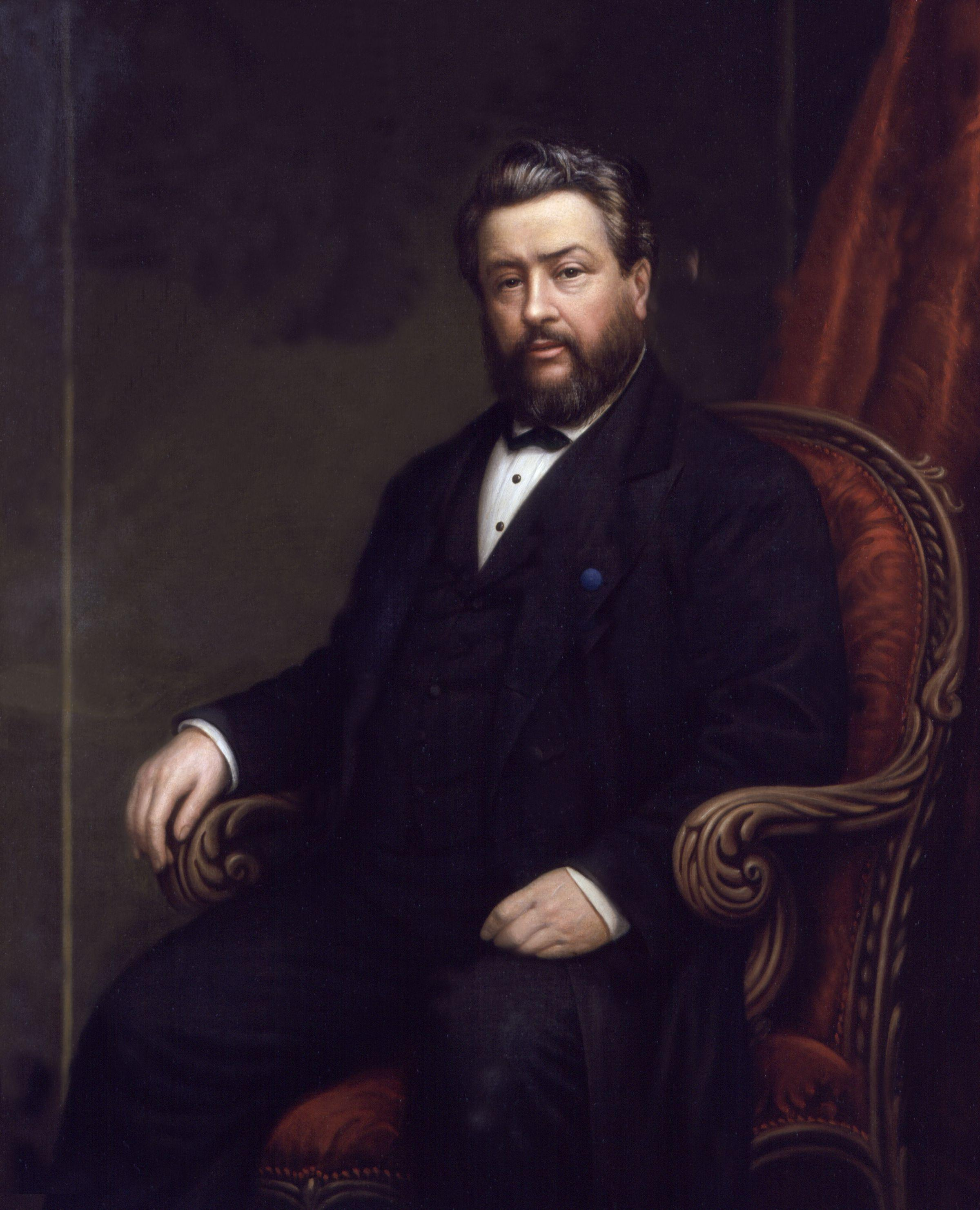
This was not what caught my interest, however. Right below the account of Holls' memorial was an obituary for the widow of the famous British Baptist pastor Charles Haddon Spurgeon. The main emphasis of the obituary that struck me was the mention of both Charles and Susannah Spurgeon's generosity. The obituary stated: "In 1879 Mr. Spurgeon's congregation, on the occasion of his silver wedding, presented a purse containing 6,000 [pounds sterling] to him. He immediately divided the money between the Orphanage, Pastor's College, and other institutions he founded."
A sum such as that provided to the Spurgeons would no doubt have been equivalent to several years' wages for an average Briton in 1879. He was a mega-church pastor before anyone had heard of the mega-church. He is still regarded one of the more influential figures in Baptist history. How many modern American ministers would be inclined to give such a sizable sum away today? While most ministers are no doubt in the ministry for the good of their parishioners, there are those who are infamous for their flaunting of wealth--be it clothing, cars, or houses. I won't mention names, but one comes to mind that was on basically every TV station early in the morning during my high school years.
The church could use a few more Spurgeons in my opinion (on so many levels).

Last summer, as I've mentioned previously here and here on this site, I had an internship with the Theodore Roosevelt Center at Dickinson State University. That internship with the digital library gave me an opportunity to research all sorts of seemingly random people. Most of the documents I reviewed were letters to President Roosevelt or one of his close associates. The authors of these letters could at times be quite famous people, such as Elihu Root, Henry Cabot Lodge, or Mark Hanna (those with knowledge of the Progressive Era will find these names familiar). At times, they would be unknown to me.
Finding the names of these less-well-known individuals in the correspondence would invariable lead to that all-too-twentieth-century research tool--the Google search. At times, these folks were like ghosts...nonexistent. At other times, I would learn some interesting information. One of the people that I had to research in this manner was a New York Judge by the name of F. W. Holls. He was influential in leading a famous peace delegation at the Hague. My search for Judge Holls led me to the New York Times' October 23, 1903, edition. Old NYT articles are available for search on the web, and they were invaluable for me over the summer. Holls died in July of that year, and President Roosevelt sent a personal eulogy to be read at the memorial service.
This was not what caught my interest, however. Right below the account of Holls' memorial was an obituary for the widow of the famous British Baptist pastor Charles Haddon Spurgeon. The main emphasis of the obituary that struck me was the mention of both Charles and Susannah Spurgeon's generosity. The obituary stated: "In 1879 Mr. Spurgeon's congregation, on the occasion of his silver wedding, presented a purse containing 6,000 [pounds sterling] to him. He immediately divided the money between the Orphanage, Pastor's College, and other institutions he founded."
A sum such as that provided to the Spurgeons would no doubt have been equivalent to several years' wages for an average Briton in 1879. He was a mega-church pastor before anyone had heard of the mega-church. He is still regarded one of the more influential figures in Baptist history. How many modern American ministers would be inclined to give such a sizable sum away today? While most ministers are no doubt in the ministry for the good of their parishioners, there are those who are infamous for their flaunting of wealth--be it clothing, cars, or houses. I won't mention names, but one comes to mind that was on basically every TV station early in the morning during my high school years.
The church could use a few more Spurgeons in my opinion (on so many levels).
04 February 2012
Puritan Education--The Old Deluder Satan Act of 1647
This evening, I was preparing a couple of lectures for my section of US History to 1877. The second of these lectures related to colonial intellectual life, broadly defined to include education, the Enlightenment, and the Great Awakening. The latter two events occurred nearly simultaneously and they both left an important mark in what America would become. In some ways, however, both movements were indebted to the educational practices set up by the earliest Puritan settlers.
The Puritans were a very word-based group. They believed that every man was responsible to understand the revelation of God as given in the Bible. After the Antinomian Controversy that Roger Williams (one of my favorite figures in early colonial history) and Anne Hutchinson aroused, the Puritans in Massachusetts decided they would start a college that would train ministers to stay on the straight and narrow. For this reason, Harvard College became the first institution of higher learning in what would become British North America. (Jones et al., Created Equal, 50)
One of the more interesting pieces of legislation that the Massachusetts Bay colony passed was the "Old Deluder Satan Act" (1647), which argued that "It being one chief project of that old deluder, Satan, to keep men from the knowledge of the Scriptures," schools should be set up in the colony to teach children to read the Scriptures. Every town that had 50 families was supposed to hire a teacher to teach children to read the Bible so that they could avoid the problems that the Old Deluder would bring with an ignorance of God's revelation. Furthermore, every town with 100 families had to set up a "grammar school" (a school that taught Latin) so that the boys in the town would be prepared for a university education, presumably at Harvard (the only college in the colonies at that time) or back in the mother country.
One of the more interesting points of this legislation was the funding mechanism. There were two possible methods of funding: 1) charge the parents of the students, and 2) public funding from all of the citizens. Some people argue that calls for public funding of education in American society are rather new. That's not exactly the case, as this act declared. Individual schooling was more common in the southern colonies because there were few towns, and only the children of the wealthy planters were expected to get educated. New England became the more diverse economy, while the South languished behind for much of US history. Perhaps this little tidbit from American church history gives a good reason why this was the case.
The Puritans were a very word-based group. They believed that every man was responsible to understand the revelation of God as given in the Bible. After the Antinomian Controversy that Roger Williams (one of my favorite figures in early colonial history) and Anne Hutchinson aroused, the Puritans in Massachusetts decided they would start a college that would train ministers to stay on the straight and narrow. For this reason, Harvard College became the first institution of higher learning in what would become British North America. (Jones et al., Created Equal, 50)
One of the more interesting pieces of legislation that the Massachusetts Bay colony passed was the "Old Deluder Satan Act" (1647), which argued that "It being one chief project of that old deluder, Satan, to keep men from the knowledge of the Scriptures," schools should be set up in the colony to teach children to read the Scriptures. Every town that had 50 families was supposed to hire a teacher to teach children to read the Bible so that they could avoid the problems that the Old Deluder would bring with an ignorance of God's revelation. Furthermore, every town with 100 families had to set up a "grammar school" (a school that taught Latin) so that the boys in the town would be prepared for a university education, presumably at Harvard (the only college in the colonies at that time) or back in the mother country.
One of the more interesting points of this legislation was the funding mechanism. There were two possible methods of funding: 1) charge the parents of the students, and 2) public funding from all of the citizens. Some people argue that calls for public funding of education in American society are rather new. That's not exactly the case, as this act declared. Individual schooling was more common in the southern colonies because there were few towns, and only the children of the wealthy planters were expected to get educated. New England became the more diverse economy, while the South languished behind for much of US history. Perhaps this little tidbit from American church history gives a good reason why this was the case.
30 January 2012
The Founding Fathers and Christianity
One of the blogs that I frequently check out as a student of American church history is the the Religion in American History Blog. Today, there was a really interesting interview regarding the religious beliefs of Patrick Henry and other founding fathers.
Baylor University professor Thomas Kidd wrote a book on Henry, and is the interviewee in this particular post. He brings up a very important point that people often ignore. Many people today look at the founding fathers as men of great faith and claim that most of them were fervent evangelicals. This is simply not the case. The other extreme is false, as well. People on the other side of the argument try to claim that almost all of the founding fathers were deists like Thomas Jefferson and Benjamin Franklin. Both sides of the argument have ulterior motives in trying to sell their position, but they are both wrong at the end of the day. It is safe to say that just about all of the founders were profoundly impacted by the Judeo-Christian belief system, but actual beliefs varied widely. For a previous post on this part of American church history, look here.
One important thing to point out about these people with widely differing beliefs is that they nevertheless came together for a common cause. Then again, it was only a few years before the niceties wore off. We haven't come very far in that regard over 200 years.
Baylor University professor Thomas Kidd wrote a book on Henry, and is the interviewee in this particular post. He brings up a very important point that people often ignore. Many people today look at the founding fathers as men of great faith and claim that most of them were fervent evangelicals. This is simply not the case. The other extreme is false, as well. People on the other side of the argument try to claim that almost all of the founding fathers were deists like Thomas Jefferson and Benjamin Franklin. Both sides of the argument have ulterior motives in trying to sell their position, but they are both wrong at the end of the day. It is safe to say that just about all of the founders were profoundly impacted by the Judeo-Christian belief system, but actual beliefs varied widely. For a previous post on this part of American church history, look here.
One important thing to point out about these people with widely differing beliefs is that they nevertheless came together for a common cause. Then again, it was only a few years before the niceties wore off. We haven't come very far in that regard over 200 years.
28 January 2012
Pictures of the Church I'm Writing My Book On
As I've mentioned briefly before, I'm in the process of writing a short book on a church that is about to be demolished as soon as spring comes to North Dakota. This church has been abandoned for about 14 years, and the structure on the inside and outside show the wear. The church, as you can hopefully see, blended into the city streetscape of the town. The lack of a parking lot no doubt contributed to its decline, as it did several other small churches in town. This is the last of the old-style wood-framed churches in town, and it is a link to the immigrant past of Grand Forks. This is one of the important threads that I'm trying to bring out in the book, which should be out around the time of the demolition.


Note the proximity to the house, as well as the lean of the wall. Now, the interior with a sagging ceiling and gutted fixtures:


Note the charred attic, left from a fire in 1944. More to come about American church history at a later date--including information on how to get the book.


Note the proximity to the house, as well as the lean of the wall. Now, the interior with a sagging ceiling and gutted fixtures:


Note the charred attic, left from a fire in 1944. More to come about American church history at a later date--including information on how to get the book.

21 January 2012
Evangelical Voters and the South Carolina Primary
Evangelical voters make up a very sizable portion of the electorate in several Southern and Midwestern states. In my last post, I pointed out that the endorsement of Rick Santorum by several evangelical leaders signaled a shift in attitudes. Apparently, that endorsement changed few minds.
The polls have closed, and the people of South Carolina have spoken. South Carolina is a state with many evangelicals, and exit polls indicated that 65% of the people that voted today claimed to be evangelical Christians. Apparently, that whole Santorum endorsement thingie didn't really work out too terribly well for the former Senator from Pennsylvania.
One thing is for sure according to the exit polls from both South Carolina and Iowa, evangelicals are still not overly enthused about voting for a Mormon for president, as a pastor's endorsement of Rick Perry in October predicted. Romney got 14% of the evangelical vote in Iowa, and his support rose to only 22% in SC, in spite of the dropping out of self-proclaimed evangelicals Rick Perry and Michele Bachmann, who combined for 20% of the evangelical vote in Iowa. Only 21% of evangelicals voted for Santorum in SC, in spite of the endorsement by some of their prominent leaders. This is not the biggest surprise, however.
The biggest surprise, in my opinion, coming out of the South Carolina primary was the number of evangelicals who supported Newt Gingrich. 44% of evangelicals supported the former Speaker of the House, while only the 22% mentioned above supported Romney. For non-evangelicals, Romney got 38% of the vote, while Gingrich only got 33%.
Christianity emphasizes personal righteousness. Evangelicals tend to pay serious lip service to this idea. Only 18% of the voters in SC claimed that strong moral character was the main trait that they were looking for in a candidate. If all of the these people were evangelicals, 47% find moral character as a secondary consideration to beating Barack Obama or someone having the right experience (Harry Truman did not have the right experience, but most historians and laymen consider him well above average when it comes to leadership). While I understand that people can change and that there is redemption, I personally have to question the judgment of a serial adulterer who was kicked out of a Congress controlled by his own party for ethics charges. The average person on the street considers Congressman/woman and ethics as an oxymoron, and this very body, Congress, kicked the Speaker out for ethics, all while his party had a solid majority. His dealings with Fannie and Freddie have also come under fire. That's not even mentioning the allegations his wife brought up this week.
But, hey, that's apparently better than having a Mormon as presidential candidate.
The polls have closed, and the people of South Carolina have spoken. South Carolina is a state with many evangelicals, and exit polls indicated that 65% of the people that voted today claimed to be evangelical Christians. Apparently, that whole Santorum endorsement thingie didn't really work out too terribly well for the former Senator from Pennsylvania.
One thing is for sure according to the exit polls from both South Carolina and Iowa, evangelicals are still not overly enthused about voting for a Mormon for president, as a pastor's endorsement of Rick Perry in October predicted. Romney got 14% of the evangelical vote in Iowa, and his support rose to only 22% in SC, in spite of the dropping out of self-proclaimed evangelicals Rick Perry and Michele Bachmann, who combined for 20% of the evangelical vote in Iowa. Only 21% of evangelicals voted for Santorum in SC, in spite of the endorsement by some of their prominent leaders. This is not the biggest surprise, however.
The biggest surprise, in my opinion, coming out of the South Carolina primary was the number of evangelicals who supported Newt Gingrich. 44% of evangelicals supported the former Speaker of the House, while only the 22% mentioned above supported Romney. For non-evangelicals, Romney got 38% of the vote, while Gingrich only got 33%.
Christianity emphasizes personal righteousness. Evangelicals tend to pay serious lip service to this idea. Only 18% of the voters in SC claimed that strong moral character was the main trait that they were looking for in a candidate. If all of the these people were evangelicals, 47% find moral character as a secondary consideration to beating Barack Obama or someone having the right experience (Harry Truman did not have the right experience, but most historians and laymen consider him well above average when it comes to leadership). While I understand that people can change and that there is redemption, I personally have to question the judgment of a serial adulterer who was kicked out of a Congress controlled by his own party for ethics charges. The average person on the street considers Congressman/woman and ethics as an oxymoron, and this very body, Congress, kicked the Speaker out for ethics, all while his party had a solid majority. His dealings with Fannie and Freddie have also come under fire. That's not even mentioning the allegations his wife brought up this week.
But, hey, that's apparently better than having a Mormon as presidential candidate.
15 January 2012
Catholics, Evangelical Protestants, and a Shift in Presidential Politics
Yesterday, as I read some of the news headlines on the interweb, I came across one that dealt with the endorsement that some evangelical voters gave to Rick Santorum. It's not terribly surprising that evangelicals rejected Mitt Romney because of his Mormonism and his supposed liberal tendencies. Of course, Romney may not know whether he's a conservative, liberal, or something totally different. The evangelical voters considered Santorum, Newt Gingrich, and Rick Perry. The very fact that they chose Santorum shows a significant shift in American Protestant politics over the past few decades.
A major party has nominated a Roman Catholic for president three times. Each time, it's been the Democrats that have done so. The first Catholic to run for president was Al Smith of New York in 1928. He lost to Herbert Hoover, and those who lived through the Depression blame Hoover for that debacle to this day, but that's another story. Hoover won a landslide largely because a Republican was in office and the economy seemed to be booming. However, there was also the frequent assertion that the Democrats were the party of "Rum, Romanism, and Rebellion." The 1920s was a period that saw the growth of the second Ku Klux Klan, and Catholics were one of the major groups that these nativists saw as damaging Americanism with their taking orders from Rome. There was concern that a Smith presidency would subordinate itself to the pope, not the Constitution.
Fast-forward just over thirty years. In 1960, another Catholic ran for president. The concern over a president having more allegiance to the Vatican than the US was a big concern for many Protestants. The candidate for president this time was John F. Kennedy. A 2007 article in Baptist History & Heritage by Ricky Floyd Dobbs examined the concern that conservative Baptists had regarding a Catholic running for president, using the Texas Baptist Standard as a case study. Kennedy won, and he is to date the only Catholic to become president. While some Americans would view him as a liberal, and his presidency was shortened by an assassins' bullet, most people would not argue that Kennedy put the concerns of the Vatican above those of America.
In 2004, John Kerry ran for president against the incumbent George W. Bush. His Catholicism was not the major issue, as the fear of terrorism seemed to be the overarching topic in this election. That was a general election, however, and evangelicals have tended to web themselves to the Republican Party in the last few decades. Most of the Republican candidates over time have been WASPs, with few women, minorities, and non-Protestants attempting a run. This year, evangelicals chose between Santorum, Gingrich, and Perry. Of the three, Perry would be the closest candidate to an evangelical. However, he's come across as less-than-presidential in debates and other public appearances. That leaves Santorum and Gingrich, both Catholics, as the best hope for pro-life, anti-Mormon evangelicals. While Romney's stand on abortion can be questioned, John Huntsman, another Mormon, seems to be solidly pro-life.
All of this goes to show the major change in Protestant attitudes toward Catholicism. Catholics are now considered more mainstream to evangelical voters. Mormons are not. Could this shift signal the election of a President Santorum? Not likely, but the change over time is nonetheless interesting.
A major party has nominated a Roman Catholic for president three times. Each time, it's been the Democrats that have done so. The first Catholic to run for president was Al Smith of New York in 1928. He lost to Herbert Hoover, and those who lived through the Depression blame Hoover for that debacle to this day, but that's another story. Hoover won a landslide largely because a Republican was in office and the economy seemed to be booming. However, there was also the frequent assertion that the Democrats were the party of "Rum, Romanism, and Rebellion." The 1920s was a period that saw the growth of the second Ku Klux Klan, and Catholics were one of the major groups that these nativists saw as damaging Americanism with their taking orders from Rome. There was concern that a Smith presidency would subordinate itself to the pope, not the Constitution.
Fast-forward just over thirty years. In 1960, another Catholic ran for president. The concern over a president having more allegiance to the Vatican than the US was a big concern for many Protestants. The candidate for president this time was John F. Kennedy. A 2007 article in Baptist History & Heritage by Ricky Floyd Dobbs examined the concern that conservative Baptists had regarding a Catholic running for president, using the Texas Baptist Standard as a case study. Kennedy won, and he is to date the only Catholic to become president. While some Americans would view him as a liberal, and his presidency was shortened by an assassins' bullet, most people would not argue that Kennedy put the concerns of the Vatican above those of America.
In 2004, John Kerry ran for president against the incumbent George W. Bush. His Catholicism was not the major issue, as the fear of terrorism seemed to be the overarching topic in this election. That was a general election, however, and evangelicals have tended to web themselves to the Republican Party in the last few decades. Most of the Republican candidates over time have been WASPs, with few women, minorities, and non-Protestants attempting a run. This year, evangelicals chose between Santorum, Gingrich, and Perry. Of the three, Perry would be the closest candidate to an evangelical. However, he's come across as less-than-presidential in debates and other public appearances. That leaves Santorum and Gingrich, both Catholics, as the best hope for pro-life, anti-Mormon evangelicals. While Romney's stand on abortion can be questioned, John Huntsman, another Mormon, seems to be solidly pro-life.
All of this goes to show the major change in Protestant attitudes toward Catholicism. Catholics are now considered more mainstream to evangelical voters. Mormons are not. Could this shift signal the election of a President Santorum? Not likely, but the change over time is nonetheless interesting.
Subscribe to:
Posts (Atom)