Showing posts with label Ronald Reagan. Show all posts

23 September 2012

A Model of Christian Charity in the Classroom

This semester in the US to 1877 class that I am teaching, I have been utilizing a variety of primary sources to give students a better understanding of the way the world worked in the early days of European settlement in the Americas. Prior to last week, I've had students look at Richard Hakluyt's "Discourse on Western Planting," some of the diary of Christopher Columbus, and some of John Smith's diary from the early days of Jamestown.

This past week, I utilized an excerpt from John Winthrop's "Model of Christian Charity," a sermon that he utilized before the Puritans disembarked in what would become Massachusetts Bay Colony. Many people, among them Ronald Reagan, have utilized the sermon as the beginning of the idea of American exceptionalism. This is the first use in the British colonies of the phraseology of a "city upon a hill." This was one of the sections that I used in class.
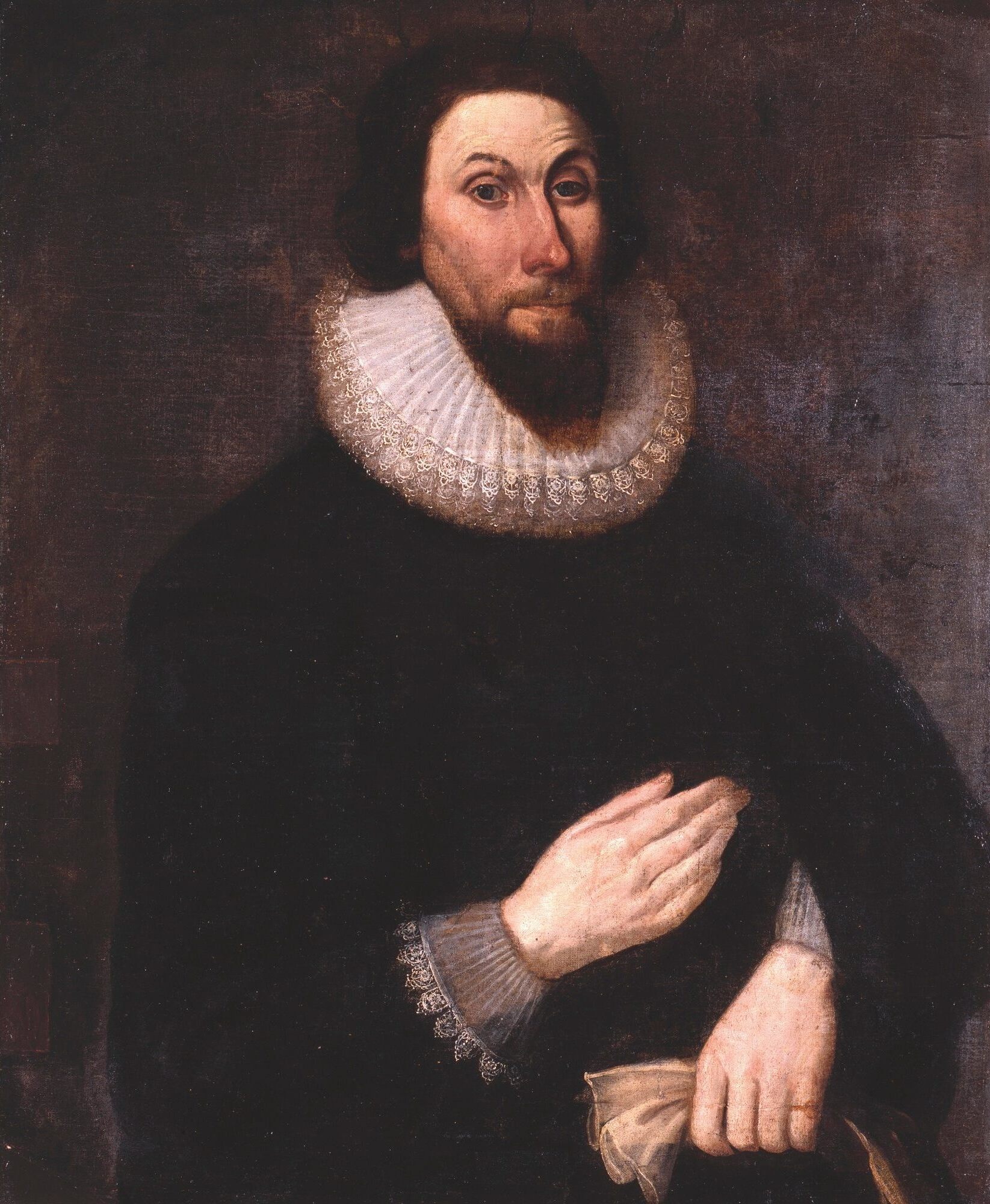
John Winthrop, via Wikimedia Commons


Perry Miller pointed out that this "Errand into the Wilderness" was very much intended to shed the light to Europe as to what a proper Christian commonwealth (note the term commonwealth--it was used extensively at the time) should look like. Winthrop's sermon pointed out the importance of a covenant between both the community and God and the community and each other. One of the important thoughts about the community is found in the following statement: "Lastly, when there is no other means whereby our Christian brother may be relieved in his distress, we must help him beyond our ability rather than tempt God in putting him upon help by miraculous or extraordinary means. This duty of mercy is exercised in the kinds: giving, lending and forgiving (of a debt)." It is important to remember that this was in the idea of church AND state helping, because they were so interconnected at the time.

The early Puritans get a bad rap for being grubby materialists by some historians, especially those of the Marxist variety. The ideal represented in this sermon was never completely achieved--note the jeremiads of the next generation--but the idea nonetheless shows that there was an ideal of looking out for the good of those in the community, even if it did not benefit an individual. The Puritans were frequently among the leading merchants of the day and they continued this activity in the New World, but this primary source contrasts the popular conception and reality of much of American history, even of that which occurred just a few years earlier in Virginia.

16 December 2011

Significance of the Puritans Today

Those silly Puritans, with their funny hats and grim demeanor.  When people think of the Puritans, they tend to think of such things.  As I've mentioned before on this site, much of what you've read about the Puritans is probably not true or at least a caricature of what was true regarding these sixteenth- and seventeenth-century religious pilgrims (not to be confused with the actual Pilgrims of Plymouth).  As I've also mentioned on this site, I did a historiography of the Pilgrims this semester.  One question that needs asked is what is the significance of the Puritans today.  People such as Perry Miller, Christopher Hill, S. R. Gardiner, and R. H. Tawney wrote extensively regarding the Puritans.  They found them significant--often from the British side of the Atlantic.  What is their significance for American church history?  Here is one interpretation that I gleaned from my reading for this historiography paper:


While these works shed much light on the actual lives of Puritans and the ideas they held, laymen may still wonder about the importance of the Puritans to current life.  George McKenna attempted to answer this question in his 2007 work The Puritan Origins of American Patriotism.  McKenna’s work tied a thread throughout American history that went back into early days of the Puritan experiment in New England.  He used Miller’s errand into the wilderness to show that Americans still believe that they have a certain mission in the world, which is tied to the idea of Americanism.  McKenna argued:
The very definition of America is thus bound up with the biblical paradigm of a people, like the ancient Hebrews, given a holy mission in a new land.  It runs through the rhetoric of America’s presidents, and we can find it almost at random in their speeches, whether it was Lincoln depicting Americans as an “almost chosen people,” Franklin Roosevelt talking about an American generation’s “rendezvous with destiny,” Reagan calling America “a shining city on a hill,” or George W. Bush declaring that “America is a nation with a mission, and that mission comes from our most basic beliefs.”  We can trace this providentialism directly back to the Puritans of the seventeenth century.  They managed to envisage an America long before there was a United States of America.  America is a work of the imagination as much as it is a juridical entity, and it was their imagination that played the seminal role in creating it.  “The myth of America,” writes Sacvan Bercovitch, “is the creation of the New England Way.”
McKenna then went on to tie this thread together from New England through various reform movements or calls back to American values.  For example, when dealing with the Populists and Progressives, he pointed out that some of the reforms (like prohibition) that these groups encouraged are now considered conservative, while others (such as encouragement of labor reform) fall under the liberal rubric.  McKenna maintained that these reforms were a part of the social gospel, and that the same people supported these progressive reforms with a mainly religious purpose.[1]

McKenna did not only use examples from the Progressive Era.  He looked throughout American history and saw a Puritan thread throughout.  He saw Patriotism and the reform ethos of the Puritans as inextricably linked.  So, whether you agree with the Puritans from a religious standpoint or just think (erroneously) that they wore funny clothes and hated all manner of fun, their goal of a godly reformation has greatly impacted American history.


[1] George McKenna, The Puritan Origins of American Patriotism (New Haven: Yale University Press, 2007), 7, 218-221.