19 October 2012

What is Calvinism

The Early Reformation--Martin Luther

In the early 16th century, the political and religious hegemony that the Roman Catholic Church wielded over Europe began to crack. While it would not completely collapse, the hold the Catholic Church held over many people began to wane.
The generally accepted narrative of the Reformation holds that this movement began in Wittenburg (in what is today Germany--Germany did not exist as Germany in 1517) on October 31, 1517, with Martin Luther's nailing of the Ninety-Five Theses on the door of the castle church.
Luther was a Catholic priest at the time, but began to question certain church teachings in public, especially the sale of indulgences, which promised shortened terms in purgatory for those who paid a fee or their designee. Needless to say, this went over like the proverbial led zeppelin (not the band). In other words, Luther got into quite a bit of hot water over his ideas that questioned the pope and the church. Regardless, his ideas and his questioning of authority spread.

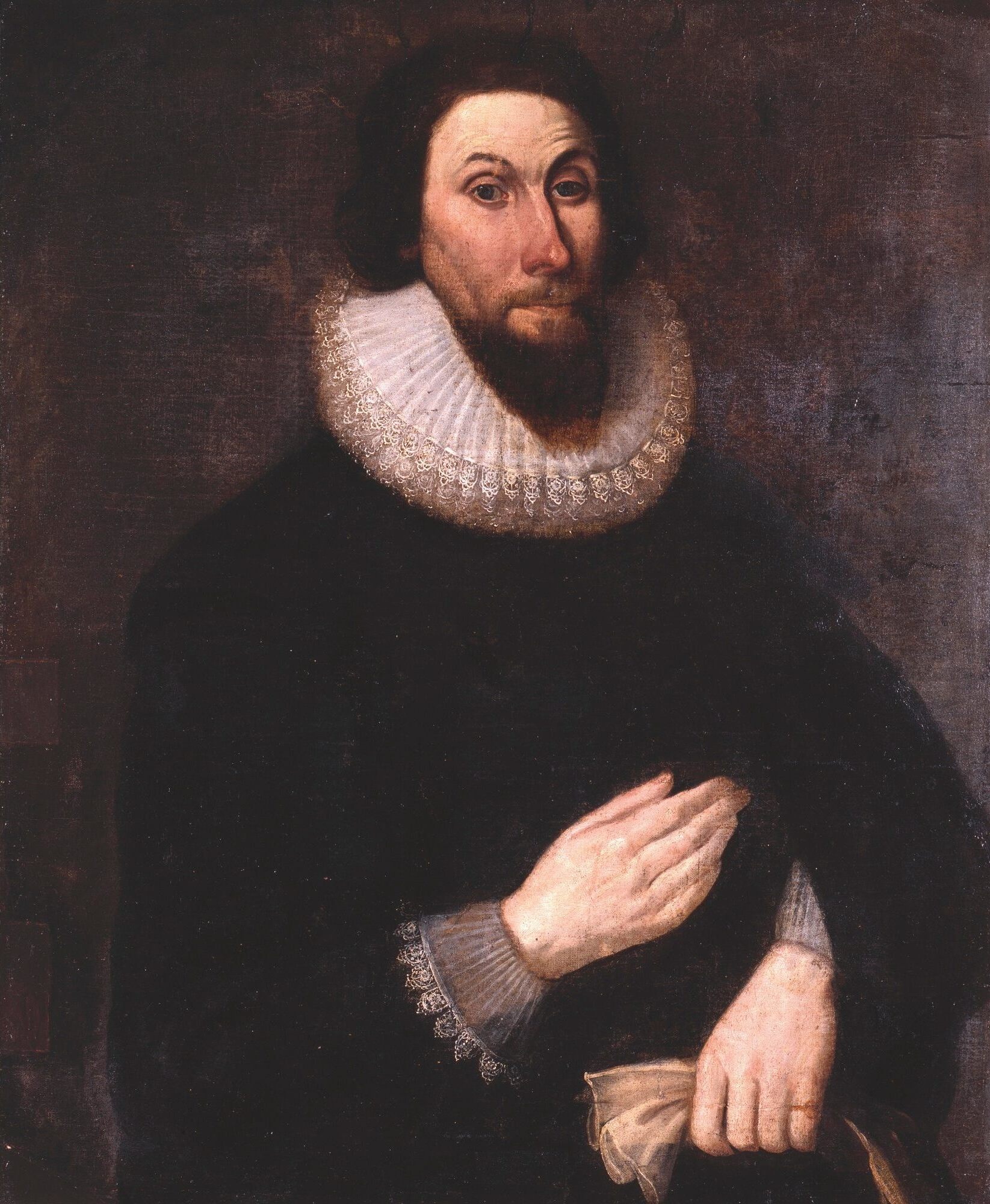
John Calvin

John Calvin

John Calvin was born in the French town of Noyon in 1509. Like Luther, Calvin spent his early life as a Roman Catholic. He actually received most of his training in law, not theology. Ironically, his major theological work, The Institutes of the Christian Religion, became the major theological text of many who followed the reformed tradition. People still study this early and very influential systematic theology.
Calvin is also well-known for his pastorate in Geneva. His teachings spread to the English-speaking world after some of the exiles from the reign of Mary I (AKA Bloody Mary) took refuge in Geneva and came under the influence of Calvin's doctrines. Incidentally, Calvin and Luther had serious disagreements over the significance of the Eucharist (or Lord's Supper, or communion, depending upon your denominational persuasion).

What is Calvinism?

What exactly was it that Calvin taught? While this description may be accused of being quite oversimplified, Calvinist thought is generally described by using the acronym of TULIP, with the letters standing for:
T--Total Depravity
U--Unconditional Election
L--Limited Atonement
I--Irresistible Grace
P--Perseverance of the Saints

Total Depravity

This part of Calvinist soteriology (the doctrine of salvation) is closely related to the general idea of original sin. Whereas some of those opposed to Calvinism would argue that there is still a spark of divinity that would allow men to search for God, Calvinists would disagree with this.
Calvinists take the effects of the fall of man further. They argue from scriptures discussing mankind as "dead in trespasses and sins" that the dead can do nothing. In other words, God first has to bring the depraved to life spiritually before they can come to him for salvation. Romans 1-3 is a passage that emphasizes extensively the depravity of man.
This depravity does not mean that all men are as bad as they can be. People do good deeds because they still experience common grace from God as made in God's image. However, while men and women are not as bad as they can be, they are as bad off as they can be because they are spiritually dead.

Unconditional Election

Since all people are spiritually dead without hope apart from God's grace, Calvin taught that God in his sovereignty chose to save certain people from their sins and the judgment that their sin entailed. This election was based upon God's choice, and in this way it was unconditional. Those predestined to salvation did nothing to earn it.
Calvinists refer to passages such as John 15, in which Jesus told the disciples that he had chosen them, and Acts 13 in which all who were appointed to eternal life believed. Romans 8 talks extensively of predestination and election.

Limited Atonement

In agreement with the teaching of just about all branches of Christianity, Calvinism holds that the substitutionary atonement of Jesus Christ provides the means of salvation. Those who are not Calvinists argue that the atonement applies to anyone who receives it.
Calvinists agree with the previous statement, but add another twist to the argument. They argue that Christ did not die for humanity in general, or all people without distinction, but only for those who were elected by God for salvation before the creation of the world. Those who hold to limited atonement point to passages such as Mark 10, in which it is said that Christ came to give his life a ransom for many (and, hence, not all).

Irresistible Grace

Salvation comes only to those whom God predestined to eternal life, and it is only because of God's grace. Therefore, according to Calvinist teaching, this grace cannot be resisted. Those who are elect will give in to God's grace.
To illustrate this point, Calvinists would point to the Damascus Road experience of Paul in Acts. One who hated Christians and sought their demise was struck down and then became the leading proponent of Jesus and his resurrection.

Perseverance of the Saints

Calvinists, also known as Reformed Christians, hold that those elected to eternal life by God's grace are then preserved by that grace. In other words, once God elected to save these individuals, they can never be lost. In other words, they will persevere to the end of their lives in a state of grace. Of course, their are false believers (tares) that appear to be elect, but never really were.
To support this teaching, passages such as Romans 8 that say no charges can be brought against the elect and that nothing can separate them from God's love or John 10 in which Christ said that those given to him cannot be plucked from his hand, or the father's hand.

A Final Note

This article is not intended to be an exhaustive account of all the shades of Calvinist thought. Also, it should be pointed out that there are numerous arguments against the Calvinist emphasis on God's sovereignty, both from other strains of Christianity and those outside the faith. The Arminian view is probably the most common among Protestants.
The intent of this article was to provide a clear and concise overview of basic Calvinist beliefs. In that, I hope it was successful and that those who may read it may find it useful.

Calvinist Doctrine

Calvinist Doctrine is Simplified with the Acronym TULIP

09 October 2012

Thomas Paine and Christianity

I frequently choose Thomas Paine's Common Sense as a reading assignment in my US to 1877 classes. Well, actually, I've used it both times I've taught US History to 1877, so that would make it an always proposition. Isn't this an American Church History blog? What does Thomas Paine have to do with American church history? Wasn't Thomas Paine a Deist. Yes, he was. He was a leading infidel in the day, but that does not take away from his importance in American history.

The text of Common Sense also tells some important information regarding the world Paine lived in. Paine was a recent immigrant to America when he wrote the pamphlet read in thousands of taverns across the land. His work contributed heavily to the sentiment for Revolution and independence from England.

Title Page from Paine's The Age of Reason, via Wikimedia Commons

In writing Common Sense, Paine understood that he had to connect with his readers. This is one of the first tips that English teachers give: know your audience. The people in eighteenth-century British North America were very much a biblically literate group. They understood allusions to the Bible that most Americans today would have to look up via a Google or Yahoo search.

Paine used the story of Saul (the king, not the one that is AKA Paul) to illustrate the evil of kings. If the Americans were to revolt against the constituted authority of the king, they had to have a good reason. Paine pointed out that the Israelites were not to have a king, at least in the beginning. He then pointed out the bad track record that kings, including biblical kings, had had up to that point. The reason a king was bad was because it was sinful and tied to the heathen nations. Many people read this section of Paine's pamphlet and come out with the idea that he was a devout Christian. His other writings, such as The Age of Reason, make it clear that he was not in any way orthodox in his beliefs. However, he understood the importance of speaking the language of the people in Common Sense. That language was overwhelmingly biblical.

03 October 2012

The October 3 Edition of the Christian Blog Carnival

This month, I have the privilege of hosting the Christian Carnival, in which Christian bloggers around the world submit their best post. Blog carnivals are a great way to get your voice out to a wider variety of viewers. The posts this month are widely varied and have a Christian emphasis or Christian worldview. Although they are not related to American church history, I hope you enjoy some or all of them.


Financial Post

Jason Price answers the question of "Should You Tithe on Small Business Income" in the affirmative on the One Money Design blog. 

The rest of the blogs this month are into the category of:

Other Posts

 Romi from Japan  at In the Way Everlasting gives a reminder that we are Aliens and Strangers in this world and that our citizenship is in heaven.
 
Justin Gilpin shares how he has experienced God's power in his life in a post titled "God's Promises in the Bible Are for Those with Faith."

Caroline at Team Harries Beats Infertility discusses the case of Abraham's wife Sarah in the post "Sarah's Infertility."

Isabel Anders has an interesting entry titled "M Is for Meme" at her self-titled blog.

James Nakumara asks whether we are ready for what God is going to do on his Nakadude blog. His post argues that "Jabez Knew What He Was Talking about."

Sarah from Down Under in Australia at This is what Sed said has a thought-provoking post that she titled "My Prayer for My Church" that questions the expectations that many assemblies have for their newly-arrived pastors.

Shannon Christman recommended a couple of blog posts this month. The first is Rob Sisson's debate on engaging in "The Debate" at InFaith's Mission blog. The second points out that "Baptism" is actually funeral. The second post was written by Ridge Burns at Ridge's Blog.


I hope that you enjoyed the submissions this month. If you have a submission at your blog or want to recommend another post, check out the Christian Carnival's homepage and then make your submissions to the submission form.

23 September 2012

A Model of Christian Charity in the Classroom

This semester in the US to 1877 class that I am teaching, I have been utilizing a variety of primary sources to give students a better understanding of the way the world worked in the early days of European settlement in the Americas. Prior to last week, I've had students look at Richard Hakluyt's "Discourse on Western Planting," some of the diary of Christopher Columbus, and some of John Smith's diary from the early days of Jamestown.

This past week, I utilized an excerpt from John Winthrop's "Model of Christian Charity," a sermon that he utilized before the Puritans disembarked in what would become Massachusetts Bay Colony. Many people, among them Ronald Reagan, have utilized the sermon as the beginning of the idea of American exceptionalism. This is the first use in the British colonies of the phraseology of a "city upon a hill." This was one of the sections that I used in class.

John Winthrop, via Wikimedia Commons


Perry Miller pointed out that this "Errand into the Wilderness" was very much intended to shed the light to Europe as to what a proper Christian commonwealth (note the term commonwealth--it was used extensively at the time) should look like. Winthrop's sermon pointed out the importance of a covenant between both the community and God and the community and each other. One of the important thoughts about the community is found in the following statement: "Lastly, when there is no other means whereby our Christian brother may be relieved in his distress, we must help him beyond our ability rather than tempt God in putting him upon help by miraculous or extraordinary means. This duty of mercy is exercised in the kinds: giving, lending and forgiving (of a debt)." It is important to remember that this was in the idea of church AND state helping, because they were so interconnected at the time.

The early Puritans get a bad rap for being grubby materialists by some historians, especially those of the Marxist variety. The ideal represented in this sermon was never completely achieved--note the jeremiads of the next generation--but the idea nonetheless shows that there was an ideal of looking out for the good of those in the community, even if it did not benefit an individual. The Puritans were frequently among the leading merchants of the day and they continued this activity in the New World, but this primary source contrasts the popular conception and reality of much of American history, even of that which occurred just a few years earlier in Virginia.

14 September 2012

Review of Heavenly Merchandize: How Religion Shaped Commerce in Puritan America


Valeri, Mark. Heavenly Merchandize: How Religion Shaped Commerce in Puritan America.
Princeton and Oxford: Princeton University Press, 2010. xiii and 337 pages. Preface. Index. Illustrations.
In 2011, the American Society of Church History awarded their Philip Schaff prize to Mark Valeri’s 2010 work titled Heavenly Merchandize. Valeri is an ordained Presbyterian minister and the E. T. Thompson Professor of Church History at Union Theological Seminary in Richmond, Virginia. His other books include Law and Providence in Joseph Bellamy’s New England and Volume 17 of The Works of Jonathan Edwards. His scholarly interests include eighteenth-century American religion, Puritanism, and the social history of Calvinism.[1]
Heavenly Merchandize, as the subtitle of the work would indicate, argues that it was religion that shaped commercial practices in Puritan New England. Valeri attempts to show change over time not only in commercial practices, but also in the religious discourse in reference to those practices. To accomplish his goal, Valeri utilized diverse resources that included the personal correspondence of merchants and ministers, account books, sermons, sermon notes taken by merchants, and various church records.
His intent, on one level, was an attempt to correct a simplistic reading of Max Weber’s The Protestant Ethic and the Spirit of Capitalism in which Puritans=Capitalists. Weber argued that the Protestant idea of an individual divine calling to an occupation led these Protestants to work harder than their Catholic counterparts.
This belief in a divine calling for all men led to the development of capitalism, according to the Weber thesis. Valeri concedes that some recent works, such as those by Stephen Foster and Charles Cohen, have attempted to correct this view by pointing out the tension between “a traditional social ethic and economic rationality.”
Foster argued that royal control and the revocation of the Massachusetts charter contributed to the triumph of market ethics. Heavenly Merchandize attempts to emphasize the “long intellectual journey traveled from the puritan settlers to their mid-eighteenth-century heirs.” (8, 254n)
While Valeri includes quite a bit of narrative background regarding the four men he emphasized in this work, he does so while analyzing their lives in the context of seventeenth- and eighteenth-century Puritan social thought. The book focuses upon the lives of four merchants in colonial Boston: Robert Keayne, John Hull, Samuel Sewell, and Hugh Hall.
These four men were successful in their business dealings and claimed to be pious Christians, although Valeri noted that early Boston merchants tended toward the antinomianism of Anne Hutchinson, which among other things, argued for individual revelation and teaching contrary to established Puritan doctrine. The Puritan establishment treated Keayne more severely than Hall. By the latter’s lifetime, ministers viewed merchants as a positive influence on society.
[1] Mark Valeri, http://upsem.edu/faculty_staff/fulltime/valeri.html (accessed November 1, 2011).

Plaque Commemorating Robert Keayne

Plaque Commemorating Robert Keayne

Robert Keayne

Robert Keayne came of age in England and joined the Merchant Taylors at relatively early age. In addition to his work as a merchant, Keayne became enamored by puritan teachings while still in England and immigrated to the New World in 1635. He left in his will large monetary gifts to the town of Boston for a “public market building,” a granary, books, and his church’s poor fund, among other causes. Overall he gave approximately thirty percent of his wealth “to civic and religious causes.” (11)
Valeri argues that in giving this large sum, Keayne was making an attempt to rehabilitate his reputation. Both civic and religious authorities had censured the Boston merchant for profiteering despite his claims that he was merely accounting for market fluctuations. The puritan leaders of Boston frequently preached against usury, profiteering, and other common mercantile practices as oppression of the poor. Church leaders frequently undertook disciplinary action against merchants for such practices, which they viewed as unchristian. To the first generation of the godly society, merchants were merely a necessary evil.

John Hull

Valeri used John Hull, another Boston merchant to illustrate religious attitudes toward merchants between the 1650s and 1680s. Religious censure of merchants declined precipitously during this period, as civil magistrates came to control more of the legal system. While the merchants did not endure formal censures or, worse, excommunications frequently, ministers still preached against profiteering.
The rise of the jeremiad in second-generation Massachusetts led to an emphasis on the sinfulness of society, and the greediness of the mercantile class drew the wrath of God in this milieu. These jeremiads were sermons that bemoaned the sin of the population in a way that hearkened to the biblical prophet Jeremiah. Ministers tied such catastrophes as drought, hard winters, and even King Philip’s War in some degree to the activities of greedy merchants through these sermons. There was no “full legitimization of New England’s expanding market” in this period. (110)

Samuel Sewall

Samuel Sewall

Samuel Sewall represented the third period that Valeri investigated. Around the turn of the eighteenth century, religious discourse changed dramatically. Sewall felt comfortable inviting ministers such as Samuel Willard and Cotton Mather to his palatial new house. When a massive hailstorm broke some of his windows as Willard and Mather made their first visit, Sewall’s minister friends interpreted the event more as a warning against greed and pride than as a punishment.
In an age marked more by patriotism, merchants became a vehicle to spreading English influence and power in a world threatened by a backward Catholicism. Ministers no longer viewed merchants as a necessary evil, but rather as proselytizers for the English way of life. The market became a positive good.
Valeri mentions economists such as William Petty who came to use data on monetary policy, rents, and incentives for trade as “a central program in the affairs of state rather than a merely domestic or private matter.” Merchants contributed to the rise of England in this new world scheme, and Boston’s ministers interpreted commerce in the following logic: “Protestantism led to wealth; wealth funded the empire; the empire combated Catholicism; the end of Catholicism brought civil liberties; and civil liberties allowed citizens to practice Protestant and market principles.” (134)


Hugh Hall

Valeri used the motif of a polite society in his discussion of Hugh Hall, a man who involved himself in many business activities, including the trading of slaves. The author described this final period as postpuritan. While many still considered themselves the heirs of the Puritan society, Boston became more cosmopolitan and tolerant and not even the most speculative economic activity drew the ire of the ministry.
Trade became more transatlantic and international in nature and the market behaved according to natural laws that corresponded in many ways to the deist view of God as a disinterested clockmaker, rather than as a result of flawed human activity. “Genteel behavior stemmed from inner virtue and conformed individuals to natural law,” argued Boston pastors such as Thomas Foxcroft. (218) This view was a dramatic departure from the Calvinist belief in human depravity.
Heavenly Merchandize was a very interesting account that attempted to trace the changing discourse between ministers and merchants in colonial Boston. While he did a good job of exposing some of the weakness of a simplistic view of the Weber thesis, Valeri’s work is largely a case study that uses representative figures. He very clearly admitted as much in the introduction to the work.
Also, it would be interesting to see a similar study of other areas influenced by Puritan thought to see if the same pattern of thought toward merchants held. The author provides a good starting point for future scholars who may want to attempt a wider overview of mercantile/ministerial interaction. Similar findings among more numerous subjects of inquiry would serve to support the main argument to an even greater degree.
Heavenly Merchandize did a good job of tracing the changing discourse related to economic activity, and for this reason deserves to be considered an important new work on Puritan social thought. Also, while it was not necessarily intended as a commentary on current discourse concerning the relationship between business and religion, it nonetheless sheds some light on the transformation in this discussion that allowed for the moral justification of modern economic practices.

09 September 2012

D. L. Moody's Revivals

I'm currently reading up on religion during the Gilded Age and Progressive Era for an independent study class that I am taking. One of the major figures that inevitably comes up when dealing with the Gilded Age is the great revivalist D. L. Moody. I recently read God's Man for the Gilded Age by Bruce J. Evenson.

Moody got his start in Christian work around the Civil War era in Chicago's inner city. Along with his partners at the local YMCA, Moody built the largest Sunday Schools in the nation. His work was so well-known that it even earned a visit from none other than the sixteenth president, Honest Abe himself. Moody's main ministerial emphasis at this time was among the poorest of the "urchins" that wandered the city streets.

In the early 1870s, Moody took a trip to England that started out quite inauspiciously, with only 6 people attending one mid-day service. What led to Moody's success in the British Isles and later in America was his ability to draw most conservative and moderate Protestants together while also utilizing the local news media to draw attention and create excitement about his meetings. Evenson emphasized the part that the newspapers had in spreading the news about the revival.

One of the things that I found most interesting about the Moody's American stops was the description of what was going on at the time in America. The Panic of 1873 (actually an economic depression) was still causing widespread deprivation among the wide majority of Americans. The people who actually supported the revival financially were the well-to-do. In New York, people as wealthy as Cornelius Vanderbilt attended the meetings, in which Moody claimed that the main problem with America was the emphasis on obtaining wealth in this life. Interestingly enough, at this same New York revival, the papers complained that the people who most needed it--the poor--were not present, and that the revival would not be as successful as it otherwise would have been. This statement is quite ironic considering where Moody got his start, and it also shows that good Christianity in Gilded Age American church history was for many people associated with middle class success.

25 August 2012

Teaching US History to 1877

I've started my latest semester and have a week under my belt. I'm taking an independent study course in the Gilded Age and Progressive Era, which is the general time-frame of most of my research. I also have six hours of research credit this semester that is going to go toward my final scholarly project. The Doctor of Arts program that I am in does not have a traditional dissertation, but rather a project that involves primary research (like a dissertation) and a pedagogical component (somewhat like an EdD, I think). My research is going to focus on the local religious landscape during the late nineteenth and early twentieth centuries. I've noted some of my work previously on this site.

In addition to my own work, I am again teaching a section of History 103, The US to 1877. I utilize Tindall and Shi's America: A Narrative History for the course. I like this book well enough as a political narrative, but think that it has the same weakness that many of the other textbooks I've reviewed have. They pretty much have a handful of pages on the pre-Columbian Americans and something similar for the background of Columbus's voyages to the New World. This gives enthusiastic college freshmen the idea that the history of the New World began with exploration in the late fifteenth century.

There were millions of people in the New World before Columbus, and I think it's important to note them. I give my first major lecture on the topic of the American Indians. I then move to the buildup to Europe in 1492. I try to answer questions about the economic system and the changes that were going on at this time and the major reasons for European exploration and expansion--religion was one of them. I think that this gives the students a better background for understanding what took place after the initial contact between Columbus and his Native American hosts in the Bahamas in 1492.