23 September 2012

A Model of Christian Charity in the Classroom

This semester in the US to 1877 class that I am teaching, I have been utilizing a variety of primary sources to give students a better understanding of the way the world worked in the early days of European settlement in the Americas. Prior to last week, I've had students look at Richard Hakluyt's "Discourse on Western Planting," some of the diary of Christopher Columbus, and some of John Smith's diary from the early days of Jamestown.

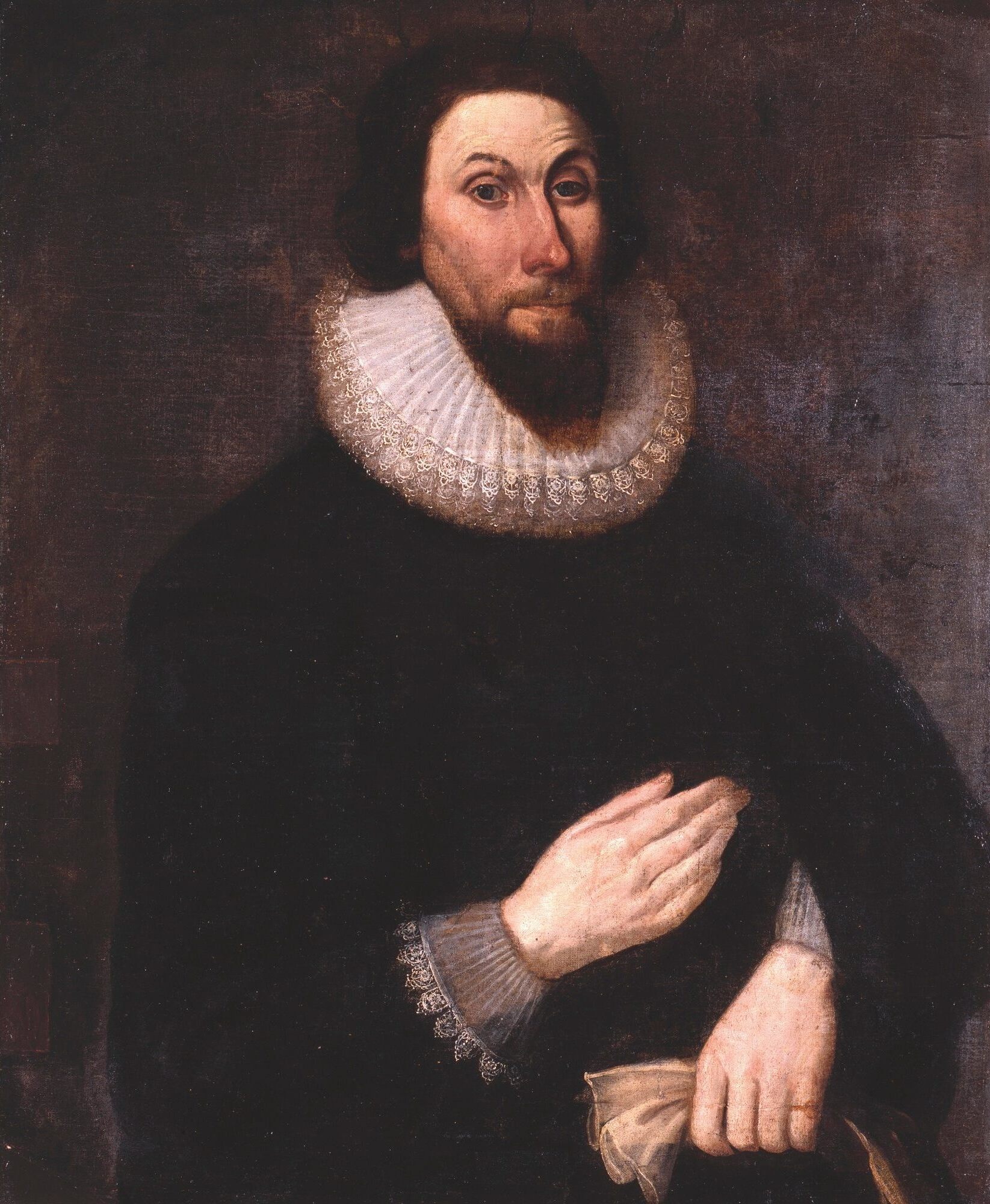
This past week, I utilized an excerpt from John Winthrop's "Model of Christian Charity," a sermon that he utilized before the Puritans disembarked in what would become Massachusetts Bay Colony. Many people, among them Ronald Reagan, have utilized the sermon as the beginning of the idea of American exceptionalism. This is the first use in the British colonies of the phraseology of a "city upon a hill." This was one of the sections that I used in class.

John Winthrop, via Wikimedia Commons


Perry Miller pointed out that this "Errand into the Wilderness" was very much intended to shed the light to Europe as to what a proper Christian commonwealth (note the term commonwealth--it was used extensively at the time) should look like. Winthrop's sermon pointed out the importance of a covenant between both the community and God and the community and each other. One of the important thoughts about the community is found in the following statement: "Lastly, when there is no other means whereby our Christian brother may be relieved in his distress, we must help him beyond our ability rather than tempt God in putting him upon help by miraculous or extraordinary means. This duty of mercy is exercised in the kinds: giving, lending and forgiving (of a debt)." It is important to remember that this was in the idea of church AND state helping, because they were so interconnected at the time.

The early Puritans get a bad rap for being grubby materialists by some historians, especially those of the Marxist variety. The ideal represented in this sermon was never completely achieved--note the jeremiads of the next generation--but the idea nonetheless shows that there was an ideal of looking out for the good of those in the community, even if it did not benefit an individual. The Puritans were frequently among the leading merchants of the day and they continued this activity in the New World, but this primary source contrasts the popular conception and reality of much of American history, even of that which occurred just a few years earlier in Virginia.

14 September 2012

Review of Heavenly Merchandize: How Religion Shaped Commerce in Puritan America


Valeri, Mark. Heavenly Merchandize: How Religion Shaped Commerce in Puritan America.
Princeton and Oxford: Princeton University Press, 2010. xiii and 337 pages. Preface. Index. Illustrations.
In 2011, the American Society of Church History awarded their Philip Schaff prize to Mark Valeri’s 2010 work titled Heavenly Merchandize. Valeri is an ordained Presbyterian minister and the E. T. Thompson Professor of Church History at Union Theological Seminary in Richmond, Virginia. His other books include Law and Providence in Joseph Bellamy’s New England and Volume 17 of The Works of Jonathan Edwards. His scholarly interests include eighteenth-century American religion, Puritanism, and the social history of Calvinism.[1]
Heavenly Merchandize, as the subtitle of the work would indicate, argues that it was religion that shaped commercial practices in Puritan New England. Valeri attempts to show change over time not only in commercial practices, but also in the religious discourse in reference to those practices. To accomplish his goal, Valeri utilized diverse resources that included the personal correspondence of merchants and ministers, account books, sermons, sermon notes taken by merchants, and various church records.
His intent, on one level, was an attempt to correct a simplistic reading of Max Weber’s The Protestant Ethic and the Spirit of Capitalism in which Puritans=Capitalists. Weber argued that the Protestant idea of an individual divine calling to an occupation led these Protestants to work harder than their Catholic counterparts.
This belief in a divine calling for all men led to the development of capitalism, according to the Weber thesis. Valeri concedes that some recent works, such as those by Stephen Foster and Charles Cohen, have attempted to correct this view by pointing out the tension between “a traditional social ethic and economic rationality.”
Foster argued that royal control and the revocation of the Massachusetts charter contributed to the triumph of market ethics. Heavenly Merchandize attempts to emphasize the “long intellectual journey traveled from the puritan settlers to their mid-eighteenth-century heirs.” (8, 254n)
While Valeri includes quite a bit of narrative background regarding the four men he emphasized in this work, he does so while analyzing their lives in the context of seventeenth- and eighteenth-century Puritan social thought. The book focuses upon the lives of four merchants in colonial Boston: Robert Keayne, John Hull, Samuel Sewell, and Hugh Hall.
These four men were successful in their business dealings and claimed to be pious Christians, although Valeri noted that early Boston merchants tended toward the antinomianism of Anne Hutchinson, which among other things, argued for individual revelation and teaching contrary to established Puritan doctrine. The Puritan establishment treated Keayne more severely than Hall. By the latter’s lifetime, ministers viewed merchants as a positive influence on society.
[1] Mark Valeri, http://upsem.edu/faculty_staff/fulltime/valeri.html (accessed November 1, 2011).

Plaque Commemorating Robert Keayne

Plaque Commemorating Robert Keayne

Robert Keayne

Robert Keayne came of age in England and joined the Merchant Taylors at relatively early age. In addition to his work as a merchant, Keayne became enamored by puritan teachings while still in England and immigrated to the New World in 1635. He left in his will large monetary gifts to the town of Boston for a “public market building,” a granary, books, and his church’s poor fund, among other causes. Overall he gave approximately thirty percent of his wealth “to civic and religious causes.” (11)
Valeri argues that in giving this large sum, Keayne was making an attempt to rehabilitate his reputation. Both civic and religious authorities had censured the Boston merchant for profiteering despite his claims that he was merely accounting for market fluctuations. The puritan leaders of Boston frequently preached against usury, profiteering, and other common mercantile practices as oppression of the poor. Church leaders frequently undertook disciplinary action against merchants for such practices, which they viewed as unchristian. To the first generation of the godly society, merchants were merely a necessary evil.

John Hull

Valeri used John Hull, another Boston merchant to illustrate religious attitudes toward merchants between the 1650s and 1680s. Religious censure of merchants declined precipitously during this period, as civil magistrates came to control more of the legal system. While the merchants did not endure formal censures or, worse, excommunications frequently, ministers still preached against profiteering.
The rise of the jeremiad in second-generation Massachusetts led to an emphasis on the sinfulness of society, and the greediness of the mercantile class drew the wrath of God in this milieu. These jeremiads were sermons that bemoaned the sin of the population in a way that hearkened to the biblical prophet Jeremiah. Ministers tied such catastrophes as drought, hard winters, and even King Philip’s War in some degree to the activities of greedy merchants through these sermons. There was no “full legitimization of New England’s expanding market” in this period. (110)

Samuel Sewall

Samuel Sewall

Samuel Sewall represented the third period that Valeri investigated. Around the turn of the eighteenth century, religious discourse changed dramatically. Sewall felt comfortable inviting ministers such as Samuel Willard and Cotton Mather to his palatial new house. When a massive hailstorm broke some of his windows as Willard and Mather made their first visit, Sewall’s minister friends interpreted the event more as a warning against greed and pride than as a punishment.
In an age marked more by patriotism, merchants became a vehicle to spreading English influence and power in a world threatened by a backward Catholicism. Ministers no longer viewed merchants as a necessary evil, but rather as proselytizers for the English way of life. The market became a positive good.
Valeri mentions economists such as William Petty who came to use data on monetary policy, rents, and incentives for trade as “a central program in the affairs of state rather than a merely domestic or private matter.” Merchants contributed to the rise of England in this new world scheme, and Boston’s ministers interpreted commerce in the following logic: “Protestantism led to wealth; wealth funded the empire; the empire combated Catholicism; the end of Catholicism brought civil liberties; and civil liberties allowed citizens to practice Protestant and market principles.” (134)


Hugh Hall

Valeri used the motif of a polite society in his discussion of Hugh Hall, a man who involved himself in many business activities, including the trading of slaves. The author described this final period as postpuritan. While many still considered themselves the heirs of the Puritan society, Boston became more cosmopolitan and tolerant and not even the most speculative economic activity drew the ire of the ministry.
Trade became more transatlantic and international in nature and the market behaved according to natural laws that corresponded in many ways to the deist view of God as a disinterested clockmaker, rather than as a result of flawed human activity. “Genteel behavior stemmed from inner virtue and conformed individuals to natural law,” argued Boston pastors such as Thomas Foxcroft. (218) This view was a dramatic departure from the Calvinist belief in human depravity.
Heavenly Merchandize was a very interesting account that attempted to trace the changing discourse between ministers and merchants in colonial Boston. While he did a good job of exposing some of the weakness of a simplistic view of the Weber thesis, Valeri’s work is largely a case study that uses representative figures. He very clearly admitted as much in the introduction to the work.
Also, it would be interesting to see a similar study of other areas influenced by Puritan thought to see if the same pattern of thought toward merchants held. The author provides a good starting point for future scholars who may want to attempt a wider overview of mercantile/ministerial interaction. Similar findings among more numerous subjects of inquiry would serve to support the main argument to an even greater degree.
Heavenly Merchandize did a good job of tracing the changing discourse related to economic activity, and for this reason deserves to be considered an important new work on Puritan social thought. Also, while it was not necessarily intended as a commentary on current discourse concerning the relationship between business and religion, it nonetheless sheds some light on the transformation in this discussion that allowed for the moral justification of modern economic practices.

09 September 2012

D. L. Moody's Revivals

I'm currently reading up on religion during the Gilded Age and Progressive Era for an independent study class that I am taking. One of the major figures that inevitably comes up when dealing with the Gilded Age is the great revivalist D. L. Moody. I recently read God's Man for the Gilded Age by Bruce J. Evenson.

Moody got his start in Christian work around the Civil War era in Chicago's inner city. Along with his partners at the local YMCA, Moody built the largest Sunday Schools in the nation. His work was so well-known that it even earned a visit from none other than the sixteenth president, Honest Abe himself. Moody's main ministerial emphasis at this time was among the poorest of the "urchins" that wandered the city streets.

In the early 1870s, Moody took a trip to England that started out quite inauspiciously, with only 6 people attending one mid-day service. What led to Moody's success in the British Isles and later in America was his ability to draw most conservative and moderate Protestants together while also utilizing the local news media to draw attention and create excitement about his meetings. Evenson emphasized the part that the newspapers had in spreading the news about the revival.

One of the things that I found most interesting about the Moody's American stops was the description of what was going on at the time in America. The Panic of 1873 (actually an economic depression) was still causing widespread deprivation among the wide majority of Americans. The people who actually supported the revival financially were the well-to-do. In New York, people as wealthy as Cornelius Vanderbilt attended the meetings, in which Moody claimed that the main problem with America was the emphasis on obtaining wealth in this life. Interestingly enough, at this same New York revival, the papers complained that the people who most needed it--the poor--were not present, and that the revival would not be as successful as it otherwise would have been. This statement is quite ironic considering where Moody got his start, and it also shows that good Christianity in Gilded Age American church history was for many people associated with middle class success.

25 August 2012

Teaching US History to 1877

I've started my latest semester and have a week under my belt. I'm taking an independent study course in the Gilded Age and Progressive Era, which is the general time-frame of most of my research. I also have six hours of research credit this semester that is going to go toward my final scholarly project. The Doctor of Arts program that I am in does not have a traditional dissertation, but rather a project that involves primary research (like a dissertation) and a pedagogical component (somewhat like an EdD, I think). My research is going to focus on the local religious landscape during the late nineteenth and early twentieth centuries. I've noted some of my work previously on this site.

In addition to my own work, I am again teaching a section of History 103, The US to 1877. I utilize Tindall and Shi's America: A Narrative History for the course. I like this book well enough as a political narrative, but think that it has the same weakness that many of the other textbooks I've reviewed have. They pretty much have a handful of pages on the pre-Columbian Americans and something similar for the background of Columbus's voyages to the New World. This gives enthusiastic college freshmen the idea that the history of the New World began with exploration in the late fifteenth century.

There were millions of people in the New World before Columbus, and I think it's important to note them. I give my first major lecture on the topic of the American Indians. I then move to the buildup to Europe in 1492. I try to answer questions about the economic system and the changes that were going on at this time and the major reasons for European exploration and expansion--religion was one of them. I think that this gives the students a better background for understanding what took place after the initial contact between Columbus and his Native American hosts in the Bahamas in 1492.

17 August 2012

A Brief History of Seating in the Christian Church

Today's post at the American Church History blog is actually a guest post that comes to us from Joshua Gabrielson, who is a consultant involved in church furnishings. He also contributes to a relatively new blog that, in addition to dealing with his various product lines, also at times discusses current and historical developments in European and American church history related to the furnishings that people placed in the spaces in which they worshiped. You may find some other topics of interest at Joshua's Church Furniture blog.

Before you begin complaining about the hard pews you sit on at church, think about the early Christians, gathered together wherever they could meet, only allowing the weak, sick and elderly to sit on benches and walls of stone. The able-bodied gatherers stood as they listened to the preacher and speakers while mingling with other community Christians. Only during the Reformation Period, sparked by German priest and monk, Martin Luther, did church-goers begin to rest and relax by sitting during church services. But even then, the congregation often sat on cold, rough stone. Those pews are starting to sound a little better, aren’t they?

The earliest pews simply consisted of placing stones alongside one another in front of a wall, which served as the back of the pew. After the reformation of the church, the wooden pew was introduced. Individuals and families would bring in their own wooden, backed benches for use within their close family and friends. Eventually, pews were no longer considered an individual’s private property when they were provided by the church. Not long afterward, these staples of church furniture began to be permanently fixed to the floor for stability and were considered a basic element of the modern  church sanctuary.

But in the modern world of comfort and convenience, even the centuries-old tradition of adorning church sanctuaries with wooden pews is going by the wayside. The newest church seating tradition stars the church chair – available in a wide variety of styles, sizes, colors and even shapes. Chairs’ fabric is often customized to match the sanctuary’s surroundings, blending the palettes of the carpet, wall color and other color and decorative schemes in your church environment. It is unusual to find a new church building being erected that plans to use pews instead of church chairs. Why?
The American Christian church has been in the process of shifting its physical style for decades. Television ministers are implementing podiums, rather than traditional wooden pulpits, for their sermon delivery. We are seeing more nontraditional materials for church furniture, such as aluminum, titanium, acrylic and tempered glass. And as you watch your favorite minister on television, notice what the congregation is sitting on. It’s not pews, it’s church chairs.

On average, you can seat approximately 20 percent more people in a sanctuary filled with rows of chairs than one full of pews. In pews, people tend to place personal items beside them, whether a conscious effort to prevent other members from sitting too close or not. Other times, families will “claim” a pew in the church, leaving other members of the congregation feeling that they are not welcome to sit there. With church chairs, people tend to better utilize the space. Sometimes, one chair will be left empty to separate people for personal space, but overall, more seating is used for what it is meant for – sitting.

Joshua Gabrielson is a professional church consultant and owns and operates Heavenly Pulpits in Virginia.

15 August 2012

Is a Liberal Conservative Possible?

I just posted a review of a book I read. I'm into studying the intersection of politics and religion, and this book, Carl Trueman's Republocrat: Confessions of a Liberal Conservative, asks some of the same questions I've been wrestling with for the past several (probably about 8 or so) years. I'm actually about two years late on the book--it came out in 2010.

Trueman is a professor of church history at Westminster Theological Seminary, hardly a Marxist, New Left, or theologically liberal institution, but he does bring up some very important questions regarding the seeming inconsistencies in the current religious right's thinking. Theologically, he is not a liberal; politically, he is not a conservative (although he opposes abortion and gay marriage quite vociferously at times in the book).

I would urge anybody with an interest in the intersection between Christianity and American politics to read the book. The book will probably cause some people angst (actually, on both sides), but it's a discussion that I think needs to be held, especially for those who believe that Christ and the gospel is above every political system. I don't agree with everything Trueman says in the book, but it is quite humorous and an easy read (from a readability standpoint, anyway). I read the whole book word-for-word in under three hours. I highly recommend it.

11 August 2012

The World of Historical Revisionism Turned Uside Down

The Facebook and other sites on the interwebs, including one as prominent as MSN's homepage, had a history book in the news yesterday. This is quite unusual. What is even more unusual is the fact that the "history" book was written by a Christian author.

The book was David Barton's recent tome The Jefferson Lies. There is no link because the book has been pulled from shelves by Thomas Nelson Publishers. Barton is famous for his support among such famous Republican leaders as Newt Gingrich, Michelle Bachmann, and Mike Huckabee. These three have each made a run at the White House in the past two terms. Barton attempts to illuminate the Christian roots of American government for the masses. Liberals have derided him. Gingrich says he learns something new every time he hears Barton speak. Huckabee said that all Americans should be forced to listen to Barton.

Barton has frequently accused liberal historians of trying to hide the religious nature of the founding fathers. I've argued on this site multiple times that some of the founding fathers were devout Christians. Most historians would agree with that assessment. Barton goes a bit too far. In The Jefferson Lies, he attempted to paint the third President, Thomas Jefferson, as an orthodox Christian. There was no surprise that he got nailed on this by secular historians. The surprise was the number of Christian historians, some of whom are conservative evangelicals, who joined in the parade of critics. Christian authors such as Thomas Kidd at World Mag and Napp Nazworth at the Christian Post noted the affair, as did left-leaning publications such as Mother Jones. The news was everywhere.

Nelson pulled the book because of questions about its accuracy in dealing with the facts. Just about any person with a casual interest in American history knows that Jefferson was anything but orthodox in his beliefs. The whole letter from the Danbury Baptists to Jefferson arose because many people in Jefferson's day believed he was an atheist, and the Baptist Association wanted clarification that they would not be persecuted. These fears would not have been prevalent if he had been an outspoken God-fearing man. Barton's webiste at Wallbuilders tried to deal with the accusations. A scathing critique by Warren Throckmorton and Michael Coulter is dismissed because it disagreed with Barton's philosophy on American exceptionalism and these professors quoted "a number of liberal professors to prove that American Exceptionalism is a bad thing, not something good. So from the start, these two make clear that they object to the philosophy I set forth..." He also accused them of jealousy because academic books don't sell as well as popular history.

Some popular history sells quite well. Barton has sold many books. He mentions David McCullough in his attempt at refuting his critics as a popular historian. I've read many of McCullough's works. Most are not ground-breaking in interpretation. They are, however, quite good as a form of narrative history. I've thoroughly enjoyed books like The Johnstown Flood, John Adams, and 1776. Some historians may criticize McCullough for synthesizing the hard work of academic historians, but I've never heard him criticized for misusing evidence in the way that Barton is accused of distorting it. Historical interpretations vary. This is widely accepted. They can be debated. Arguments that go against clear facts, such as the idea that Jefferson was pretty much orthodox is not acceptable, nor should it be.

I will clearly state that I am an evangelical. Most outside the fold would consider my religious beliefs pretty conservative. However, as an aspiring historian, I find it troubling that people would fabricate a story and try to pass it off something other than historical fiction in the name of Jesus. Christ claimed to by the way, the truth, and the life. If he is truth, his followers should seek out the truth, wherever that truth may lead, even if it leads to answers we don't like. While historical knowledge is a sort of provisional truth, there is a truth out there. To fabricate "knowledge" for political gain is not Christ-like. To think that all of these years that I've heard about liberals and their attempt at revisionist history, one within the fold is one of the worst offenders.

Please note: I do realize the need for revisionist history. Sometimes, new evidence is available that leads to new knowledge and new interpretations. Other times, interpretations are not exactly adequate and need to be expanded or totally revised. American history and American church history are not one and the same. This fact does not hurt my faith, nor should it hurt that of any other American Christian. Making up an interpretation that doesn't hold up to the evidence does not reflect good on Christ or Christians, however.